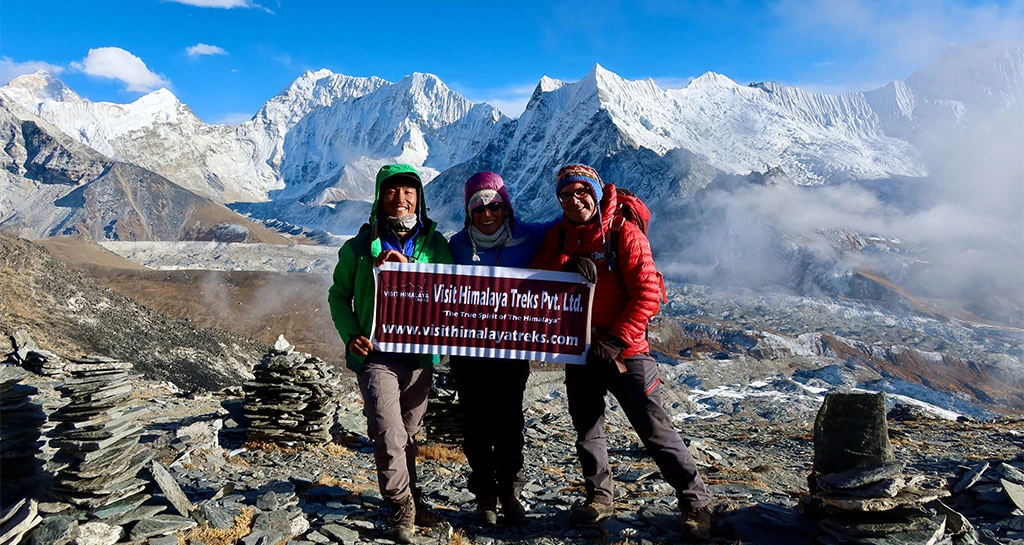
The Everest Three High Passes will take you to the world’s highest passes, such as Kongma La, Cho La, and Renjo La. Although the scenery offered by these passes is stunning, this is one of the difficult walks to undertake. Therefore, it is important to decide the time to trek the Everest Three High Passes because the weather will directly affect your safety and comfort.
When embarking on your journey, select the best seasons to maximize your safety and have an enjoyable experience. Don’t forget the extreme nature of the Everest region’s weather. The altitude and unpredictable weather will impact not only the daily temperature but also possibly emergency helicopter rescue if an accident does occur.
When planning your trip, there are many important things to consider about the weather, such as trail conditions, avalanches, a heavy snowpack, or dangerous ice. Even worse, and much more concerning, are high altitude health risks.
Seasonality also has a great impact on crowd size, visibility of the mountains, and the overall enjoyment of your journey. Bright blue skies could reveal Mount Everest in its full glory, while busy trails or fog in the Himalayas could ruin everything. Picking the right time gives you the best opportunity for an adventure as epic as the mountains.
Overview of Trekking Seasons in the Everest Region
The Everest region can be visited in all seasons, including spring, autumn, summer, and winter. Each season has its unique features and disadvantages. Spring is characterized by blooming flowers along the way, while autumn is characterized by comfortable trekking weather.
Similarly, winter is characterized by snowfall along the trails and lush snowcapped mountains, while the monsoon transforms landscapes into greenery. Winter and monsoon are the least crowded, but with the snow and rainfall, the difficulty of trekking increases dramatically.
Best Seasons for the Everest Three High Passes Trek
Spring (March to May)
Spring trekking in the Everest region, which lasts from March to May, is a pleasant time as it has mild temperatures and generally clear skies. The rhododendrons are a vivid display and will greatly enhance your trekking experience.
Spring usually provides stable trail conditions, with little to no snow at lower elevations – at some of the high passes, there may be some lingering snow. These are not usually a problem with some mountain hiking experience, proper gear, and a good acclimatization schedule for altitude.
The visibility during the spring trekking is very good, as you can see Everest and its surrounding peaks in all their glory. However, since spring is the most popular trekking time for the Everest region, you may find the trails and teahouses crowded in the spring. On some occasions, late in the season, there may be a bit of snow at the higher passes, which will affect trekking conditions.
Advantages:
- Mild temperatures and clear skies
- Beautiful blooming rhododendrons
- Stable trail conditions at lower altitudes.
- Exceptional mountain visibility
Disadvantages:
- Crowded trails, crowded teahouses.
- There is a chance of snow on the high passes in late spring, though it’s relatively uncommon.
- Increased price due to peak trekking season
- Some snow-covered areas may still be slippery.
Autumn (September to November)
Autumn is seen as the best trekking season in the Everest region. The weather is stable and dry, with crisp and clear air. Trekkers must be well prepared for the temperatures at night; they do drop quite a bit at night in the higher elevations.
During autumn, trail conditions are at their best and are well-maintained and dry. Autumn is the time when the trails are rejuvenated after the summer monsoon, and the scenery is vibrant. Autumn provides a festive atmosphere and falls during festivals like Dashain and Tihar.
Advantage:
- Excellent Mountain views with the clearest sky.
- Fresh post-monsoon trails with fewer bugs.
- Experiencing the local festivals along the route.
- The driest hiking conditions one could have.
Disadvantage:
- Crowded, due to the high demands on trails and teahouses.
- Price hikes in accommodation and services.
- Colder temperatures are especially noticeable at night.
- You need to book logistics in advance, as it may be popular.
Challenging Seasons for the Trek
Winter (December to February)
Winter treks in the Everest region mean very cold conditions, especially at high altitude, with daytime highs even below freezing and nighttime temperatures dropping quickly. Snow is really common, with plenty falling on the trails and adding both difficulty and beauty to the trek.
Trail conditions can be extreme with snow and ice covering paths, and the high passes are incredibly dangerous and sometimes even impossible. Avalanche risk increases, and deep snow just slows a trekker’s progress. Winter trekking in the Everest region should only be attempted by experienced trekkers because of the above risks.
With these risks, winter trekking also rewards with quiet solitude and peace, as there will be very few trekkers on the trail. The landscapes covered in snow are really beautiful, and oftentimes, many teahouses are closed at high altitude, plus the risk of crossing over an icy high pass is very real.
Advantage:
- Very few trekkers on the trail, meaning a peaceful trek.
- Untouched winter landscapes – they are peaceful.
- Often, clear, sunny skies provide big mountain views.
- Unique experience for expedition, adventurous trekkers.
Disadvantage:
- High passes will likely be very dangerous and sometimes impossible.
- Avalanches and deep snow increase risk.
- Many high-altitude teahouses close.
- Acclimatization is difficult due to extreme cold.
Summer (June to August)
Summer trails can be muddy and slippery because of the rain, or they can be very humid with the threat of leeches lower down the trail, where there’s vegetation and mud. The rain is torrential for a few weeks at a time, but there’s also some rain and considerable cloud cover that can last for weeks.
Trails will be slippery near the base and on low, exposed slopes, and could become slippery due to landslides. Also, those sections that are not inclined could wash away in severe rain, which again could be dangerous depending upon the route. The thick cloud along the way makes for poor visibility, and the humidity causes discomfort while trekking.
The benefits and limitations of trekking in the summer to the Everest region appear contradictory. But there are significant trade-offs between the avoidance of other trekkers in the summer expanse, which is attractive, and poor visibility and toxic terrain seriously inconvenience logistics.
Advantages:
- Rich, green landscapes – in their full lushness.
- Trekking on the trails – worst case, there are fewer trekkers.
- Abundant wildflowers and diversity of plants.
- Cooler temperatures during the daytime at higher altitudes.
Disadvantages:
- Consistent rain reduces visibility.
- Unpredictable cancellations to Lukla.
- Hypothermia risk from slippery trails, landslides, and other hazards.
- Humidity raises the risk of altitude sickness.
Recommended Best Time: spring vs. autumn
Autumn is a more preferred season for the Everest Three High Passes trek because this time has clear skies, comfortable weather, and good visibility. You will get an opportunity to witness clear mountain views and the surrounding areas.
However, spring is also referred to by many trekkers because the daytime temperature is warm and the trails have colorful rhododendron blooms. The weather is good, but there are some chances of late snow along the high pass trails in the spring season.
Essential Tips for Choosing Your Trekking Season
If you are planning to visit the three passes of Everest in the busy seasons, then book your international and domestic flights and permits in advance. Demand for accommodations and logistics is usually high in peak seasons.
For changing temperatures, bring layering clothing, thermal garments, rain, and sun protectants. Research the daily weather forecast and plan your daily schedules. Ongoing weather reports are useful to adapt your strength and itinerary.
If you’re trekking during the severe and harsh winter or the uncertain monsoon months, you should try to hire an experienced guide. An experienced guide brings not only direct knowledge for navigating tricky and challenging trails, but also experience piloting changing weather patterns, and can keep you safe throughout your trek.
Conclusion
The best time to trek the Everest Three High Passes is in spring and autumn. You will see clear skies, stable weather, and breathtaking mountain views in the fall. You will experience much warmer weather and beautiful rhododendron blossoms in the spring.
The itinerary should be planned according to your objectives. Trek in the fall if you want to socialize and experience festivals, or if you want to see busy trails. The early spring allows slightly warmer weather and fewer crowds, and opportunities to enjoy nature’s gorgeous colors while being on a quieter and peaceful adventure.
The Everest Three High Passes trek has an epic adventure waiting for you that features challenging high-altitude passes, stunning natural scenery of the Himalayas, and a taste of the unique Sherpa culture. With proper planning and seasonal selection, it allows you a safe, fun, and rewarding trek that you will remember forever.