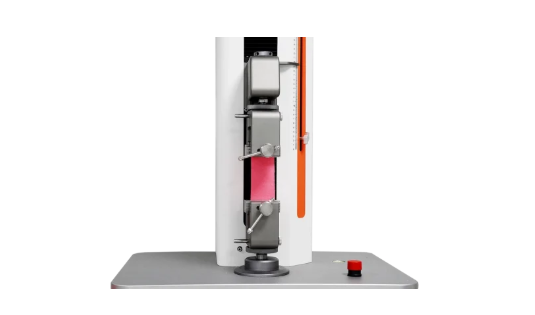
In the world of textiles, quality is not an accident—it is the result of precise measurement and rigorous testing. At the heart of this quality assurance process for fabrics from apparel to technical textiles is a crucial piece of equipment: the fabric tensile strength tester. This instrument is the definitive tool for determining how a material will perform under stress, directly predicting its durability and suitability for end use. Among the various designs available, the dual-column tensile strength tester stands out for its superior stability and accuracy, offering manufacturers an indispensable solution for reliable quality control.
What is a Fabric Tensile Strength Tester?
A fabric tensile strength tester is a precision instrument designed to measure the force required to stretch a fabric sample to its breaking point. By applying a controlled, axial tensile force, it captures essential data about a material’s mechanical properties. The process generates a force-elongation curve, from which key performance indexes are automatically calculated, including tensile strength (the maximum stress the fabric can withstand), elongation at break, and elastic modulus.
While applicable to various materials like leather, plastic, and paper, its role in the textile industry is paramount. It provides objective, quantifiable data that replaces guesswork, enabling manufacturers to verify that materials meet strict internal specifications and international standards before they enter the production cycle.
Why a Dual-Column Design is the Superior Choice
For testing that demands high load capacity or extreme precision, the dual-column framework is the industry-preferred design. Unlike single-column models, the double-column structure provides exceptional rigidity and stability. This robust construction minimizes unwanted flex or vibration during testing, ensuring that the force applied is purely axial and that the measurements captured are consistently accurate.
The SmartPull Double Column Tensile Strength Tester exemplifies this design philosophy. Its stability is further enhanced by a trapezoidal base and driven by a high-precision AC servo motor coupled with ball screws. This system delivers a smooth, stable, and controllable pulling force. The result is highly reliable and repeatable test outcomes, with a remarkable test force accuracy of ±1%, making it a trusted tool for any quality control laboratory.
Key Features and Benefits of a Modern Dual-Column Tester
A modern tensile strength tester is more than just a strong frame; it is an integrated, intelligent system designed for safety, flexibility, and ease of use.
- Uncompromised Safety: Operator protection is integral. Systems like the SmartPull incorporate an active smart alarm system with torque and displacement limits, an emergency stop button, an overload protection mechanism, and physical travel limit devices. These features work together to create a secure textile testing environment.
- Customizable and Versatile Testing: Flexibility is key for labs that test diverse fabrics. A high-quality tester offers customizable S-type load cells to measure a wide range of forces (e.g., 5N to 10KN) and supports a vast array of fixtures. These can include top-break, manual, and pneumatic clamps for various grab, strip, and seam tests, allowing the same machine to perform multiple standardized procedures.
- Intelligent Software for Complete Control: The software is the brain of the operation. An intuitive system guides the user through setup, automatically conducts repeated tests, and displays real-time data and graphs. It processes the results to generate comprehensive reports that can be exported in common formats. This software is often customizable and pre-programmed to comply with numerous global standards.
- Comprehensive Standards Compliance: For a fabric tester to be globally relevant, it must adhere to international protocols. Advanced dual-column testers are engineered to meet a wide spectrum of standards, including:
- ISO: 13934-1/2 (fabric tensile), 9073-3/4 (nonwovens), 13937-2/3/4 (tear force), 3377-2 (leather tear).
- ASTM: D5034/D5035 (fabric grab/strip), D5587 (woven fabric seam), D6797 (top breaking).
- GB/T: 3923.1/2, 3917.2/3/4/5, 19976, among others.
Technical Specifications at a Glance
Understanding the core capabilities of a machine helps in selecting the right model. Here are the typical specifications for a robust dual-column fabric tensile tester:
| Parameter | Specification |
|---|---|
| Max. Testing Capacity | 1000 kg (or tailored to needs) |
| Test Force Accuracy | ±1% of reading |
| Travel (Stroke) | Up to 900mm (without fixture) |
| Speed Range | 1 mm/min to 500 mm/min |
| Speed Accuracy | ≤ 1% |
| Data Sampling Rate | High-frequency for detailed curves |
| Power Requirements | Single-phase AC 220V, 50/60 Hz |
| Dimensions (HxWxD) | Approximately 1730 x 600 x 830 mm |
The Testing Process: From Setup to Report
Operating a dual-column tensile tester is a systematic process that ensures accurate and meaningful results.
- Preparation: The lab environment is stabilized (typically 21±2°C and 65±2% RH). The tester is placed on a vibration-free bench, connected to a stable power supply with proper grounding, and inspected. The specimen is prepared according to the relevant standard—cut to precise dimensions (e.g., 25mm x 100mm, 50mm x 75mm) using a sampling plate to ensure consistency.
- Setup & Clamping: The appropriate fixture for the test standard (e.g., pneumatic clamps for a grab test) is installed. One end of the fabric specimen is clamped in the upper jaw. The crossbeam moves to position the specimen, and the other end is secured in the lower jaw, ensuring it is seated about two-thirds into the jaws for a proper grip.
- Running the Test: In the software, the operator selects the applicable test standard and sets parameters like test speed. Upon starting, the machine applies a steadily increasing tensile force. The software plots the real-time force-elongation curve as the specimen stretches, yields, and finally breaks. The test concludes automatically.
- Data Analysis & Reporting: After the test, the software immediately calculates all key results. The operator can review the curve, validate the data (checking for jaw slip, for instance), and generate a professional test report. This report includes specimen information, test conditions, numerical results, and graphical data, ready for certification or analysis.
The Impact: Building Trust in Fabric Quality
Investing in a reliable dual-column tensile strength tester like the SmartPull model is an investment in product integrity and brand reputation. It transforms subjective quality assessments into objective, data-driven decisions.
Customer feedback highlights this value. A manager from a composite material factory noted its versatility and ease of use, while a supervisor from a rubber factory praised its reliable results and robust safety design, which increased operator confidence.
In essence, this equipment is more than a compliance tool; it is a foundational pillar for quality control. It ensures that every meter of fabric produced is strong enough, durable enough, and consistent enough to meet the demands of the real world, thereby reducing returns, enhancing safety, and solidifying a manufacturer’s reputation for excellence. For any textile business committed to quality, a dual-column fabric tensile strength tester is not just an option—it is an essential partner in production.