Most gifts are forgotten within a year. Some within a week. The branded merchandise, the experience vouchers, the gift cards chosen in the final ten minutes before a deadline — all of them share the same quality: they communicate goodwill without communicating knowledge. They say I thought of you. They do not say I know you. The gifts that survive — the ones still on the desk fifteen years later, still brought up in conversation, still pointed to as the best gift a person ever received — are the ones that got that second part right. They say I know what matters to you, and I chose something that reflects it.
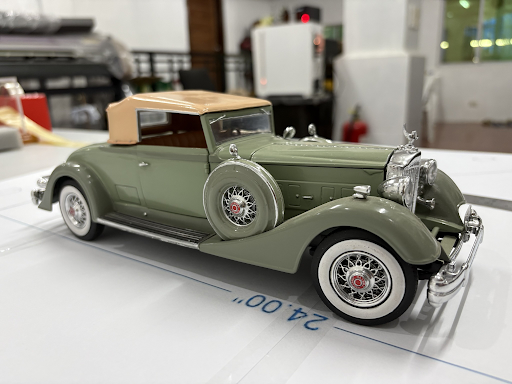
For car and aviation enthusiasts, that gift has a specific form. It is almost always a scale model — of a specific vehicle, in a specific colour, from a specific period that meant something to the recipient. Not a generic sports car ornament. Not a vague aviation theme. The exact car they drove for twelve years. The aircraft type they flew their first solo in. The model plane their company operated on its inaugural transatlantic route. That level of specificity is what transforms a present into a statement.
Why Generic Automotive and Aviation Gifts Always Disappoint
The automotive and aviation gift markets are full of products designed for people who know someone who likes cars or planes — not for people who understand what cars or planes actually mean to the person they are buying for. Novelty numberplate signs, generic racing posters, branded merchandise featuring aircraft silhouettes that do not correspond to any real aircraft: all of these occupy the same category of gift. They demonstrate awareness of the recipient’s interest without demonstrating any knowledge of it. The car enthusiast who receives a generic Ferrari ornament when the Ferrari that defined their life was a 308 GTB notices the gap immediately. The pilot who receives a branded aviation mug knows that nobody asked which aircraft.
A car model chosen with specific knowledge closes that gap definitively. The 308 GTB in the correct Rosso Corsa of the 1977 production year. The original Mustang in Wimbledon White rather than a later generation that looks similar but is not the same car. The precision of the choice communicates the depth of the research — and that depth is the gift, more than the object itself.
Choosing Between a Car Model and an Airplane Model — The Right Framework
The first question is not which object. It is which passion. Most serious automotive enthusiasts have a primary vehicle — the one they drove longest, valued most, or consider the definitive expression of what a car should be. Most aviation enthusiasts have a primary aircraft — the type they trained on, operated professionally, or followed across their career. The gift that lands is always the one that addresses the primary subject rather than the category in general.
For the car person: the vehicle that defined them. Not the brand they admire — the specific model, year, and colour of the car that marked a chapter of their life. For the aviation enthusiast: the aircraft type that represents their flying identity. Not aviation in general — the Cessna 172 they went solo in, the Boeing 737 variant they flew commercially, the Spitfire that represents the chapter of aviation history they have spent twenty years studying.
When the recipient’s passion spans both worlds — and it frequently does, since the same attention to engineering and design that drives automotive enthusiasm applies equally to aviation — a paired display works extraordinarily well. An airplane model of their primary aircraft type alongside a scale replica of their most significant car is not a compromise between two interests. It is the complete statement of a professional and personal identity that both machines helped define.
The gift that lands is never the most expensive one. It is the one that proves the giver was paying attention — to the specific subject, the specific period, and the specific meaning behind both.
The Occasions That Justify Getting It Right
Retirement
The occasion that most consistently justifies the commissioned tier — a replica of the specific vehicle or aircraft associated with the career being celebrated
Retirement gifts for car and aviation professionals are the category where the commissioned scale model consistently outperforms every alternative. A chief pilot retiring after thirty years deserves more than a generic gift. A replica of the specific aircraft type they flew longest — in the livery of the carrier at the peak of their career, with the correct tail number if documentation exists — is the only gift that acknowledges the career rather than simply acknowledging that the career happened. The difference between those two things is the difference between a present and a record.
Milestone Birthdays
40th, 50th, 60th — occasions that warrant a gift of genuine permanence
A milestone birthday is the right occasion for a gift that will still be on the shelf at the next milestone. For the car enthusiast turning fifty, a precision model plane or car model that references the vehicle associated with their twenties or thirties carries a biographical weight that no contemporary gift can match. It says: I know what that period meant, and I chose something that keeps it in permanent form. That is the appropriate weight for a significant birthday.
Corporate Milestones and Client Appreciation
Deal closings, long-term client anniversaries, significant contract completions
The corporate gift market is dominated by objects that nobody chose specifically for anyone. A commissioned scale model of the aircraft or vessel associated with a client’s business — their company’s flagship product, their operational signature, the machine that built their market position — is the gift that communicates the highest quality of attention available in the corporate gifting category. It demonstrates research, respect, and the willingness to invest in something that could only ever be given to this specific person. That combination is extremely rare in corporate gifting — and precisely because it is rare, it is remembered.
Frequently Asked Questions
What budget should I set for a car model or airplane model gift?
Quality die-cast car models and airplane models at 1:18 and 1:43 scale from reputable manufacturers range from $80 to $250. Premium precision models at larger scales sit at $250 to $500. Commissioned replicas built to a specific vehicle’s exact specification start at $400 to $500 and scale with complexity. For retirement, significant milestones, and corporate relationship gifting, the commissioned tier is the appropriate benchmark — the occasion justifies the investment and the result reflects it.
How far in advance should I commission a scale model gift?
Standard commissions at 1:18 and 1:43 scale typically require six to ten weeks from brief to delivery. Larger or more complex commissions — 1:32 and above, subjects requiring significant research, or pieces with custom display cases and engraved nameplates — run ten to fourteen weeks. For retirement parties, significant birthdays, and corporate events with fixed dates, commissioning twelve weeks ahead provides comfortable margin for any brief refinements that arise during the build.
Can a car model and an airplane model be displayed together?
Yes — and for recipients whose passion spans both automotive and aviation subjects, a paired display is one of the most coherent gifting choices available. The key is scale consistency: a car model and an airplane model displayed together should be at scales that reflect the realistic size relationship between the subjects, so the display reads as a curated collection rather than an accidental grouping. Discuss this with your model maker if commissioning both pieces simultaneously — scale matching is a straightforward adjustment at the briefing stage.
The Gift That Does Not Get Forgotten
The scale model occupies a gifting category that nothing else quite fills — permanent, specific, three-dimensional, and impossible to choose without genuine knowledge of the recipient. That combination is the reason it survives on desks and shelves long after every other gift from the same occasion has been forgotten, donated, or quietly removed. It is not a luxury version of a generic gift. It is a different category entirely — one that requires more thought and produces more lasting impact than anything else in the automotive or aviation gifting space.
Get the subject right. Get the scale right. Present it properly. The rest takes care of itself — for years.