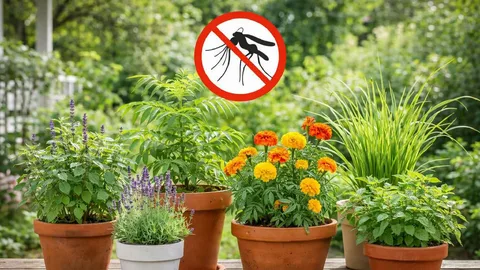
Basil, mint, rosemary, lavender, and citronella grass are among the most effective mosquito-repelling plants for containers. Each one releases natural oils that mosquitoes avoid. Grow them in pots near seating areas, and you get a living barrier instead of a spray can.
This guide covers all twelve plants, what makes each one work, and the setup that keeps them strong all season.
Which Container Plants Repel Mosquitoes Best?
The strongest performers are basil, mint, rosemary, lavender, citronella grass, lemongrass, geraniums, marigolds, sage, thyme, and catnip. Together they cover sun, shade, small pots, and large ones, so there’s an option for almost any patio or balcony.
What ties them together is scent chemistry. Compounds like linalool, menthol, citronellal, and geraniol confuse a mosquito’s sense of smell. That’s how it finds you in the first place. Crush a leaf, and the oil release spikes for a few hours. That’s the real trick most guides skip.
What Soil, Light, And Water Do These Plants Need?
Most mosquito-repelling herbs want well-draining soil, six or more hours of sun, and water only when the top inch feels dry. Skip the daily watering habit. Soggy roots kill these plants faster than dry spells ever will.
A simple mix works for nearly all of them: potting soil, a handful of perlite, and a bit of compost. Add drainage holes if your pot doesn’t already have them. Standing water invites the very mosquitoes you’re trying to repel.
Does Basil Repel Mosquitoes?
Yes, basil is one of the fastest and easiest mosquito deterrents you can grow. Its leaves carry linalool and eugenol, two oils mosquitoes steer clear of.
Plant it in an 8-inch pot with full sun. It grows quickly, often ready to harvest within a month. Pinch the flower buds as they form. This keeps the plant bushy and pushes more oil into the leaves instead of the blooms.
Is Mint Effective At Keeping Mosquitoes Away?
Yes, and it’s one of the strongest options on this list. Mint’s menthol content makes the air around it unpleasant for mosquitoes.
Keep it contained. Mint spreads fast and will choke out a shared pot within weeks. Give it its own container near a doorway or seating spot. Snip the leaves often; regular trimming keeps the oil production high.
Can Rosemary Handle Container Life and Still Repel Bugs?
Yes, rosemary tolerates poor soil and irregular watering better than almost any herb on this list. Its camphor and eucalyptol content does the mosquito-repelling work.
Water it sparingly. Overwatering is the main way container rosemary fails. Set the pot where you spend time outdoors, and let the plant dry slightly between waterings.
Why Is Lavender a Good Choice for Small Patios?
Lavender pairs mosquito control with visible curb appeal, which is rare among repellent plants. Linalool and linalyl acetate in the flowers do the repelling.
It needs full sun and soil on the drier side. Overwatering causes root rot faster than almost any mistake gardeners make with lavender. Let blooms dry on the stem if you want to save them for indoor sachets later.
Does Thyme Work in Small or Shallow Pots?
Yes, thyme is one of the best options when space is tight. It grows low and wide instead of tall, so a shallow container is enough.
Thymol is the compound responsible for its repellent effect. Full sun and light, well-draining soil keep it healthy. Trim it back occasionally to encourage denser growth.
Is Sage Worth Growing for Mosquito Control?
Yes, sage offers year-round foliage along with its repellent properties. It holds up in containers with minimal fuss.
Give it six hours of sun and let the soil dry between waterings. Prune it periodically. This keeps the plant compact and prevents it from becoming woody and less potent.
Do Marigolds Actually Repel Mosquitoes, or Is That a Myth?
Marigolds genuinely repel mosquitoes, thanks to pyrethrin in the flowers and thiophenes in the roots. It isn’t just garden folklore.
They’re one of the easiest plants here for beginners. Standard potting soil and a sunny spot are all they need. Because their potency fades with age, replacing plants yearly keeps the repellent effect strong.
Are Geraniums a Good Mosquito Deterrent for Containers?
Yes, geraniums repel mosquitoes through geraniol, a compound also used in many commercial repellents. They’re a reliable, colorful option for pots.
They tolerate average soil and need about six hours of sun. Deadhead spent blooms regularly. This keeps new flowers coming and the plant’s oil output steady.
Why Is Citronella Grass Considered the Classic Mosquito Plant?
Citronella grass earns its reputation because it produces a strong, unmistakable lemon-like oil that mosquitoes avoid. It’s the plant most people picture first when they hear “mosquito repellent.”
It needs a large pot, since it can reach three to four feet tall. Full sun and consistent watering keep it vigorous. Crushing a leaf or two near your seating area boosts the effect instantly.
Can Lemongrass Double as a Kitchen Herb and Mosquito Repellent?
Yes, lemongrass works for both. It shares citronella’s core repellent compound while also being useful in cooking and tea.
It prefers warm weather and consistent moisture. In cooler climates, bring the pot indoors before frost. Give it room to spread since mature plants get wide as well as tall.
Does Catnip Repel Mosquitoes as Well as It Attracts Cats?
Yes, and by some early research, more effectively than DEET in certain conditions. Nepetalactone, the same compound that excites cats, is what repels mosquitoes.
Full sun and well-draining soil suit it well. Harvest leaves often to keep oil production up. Replace the plant every two to three years, since older catnip loses potency over time.
Do These Plants Work Better When Grouped Together?
Yes, grouping several repellent plants in one zone works far better than spacing them around the whole yard. Concentrated scent creates a stronger barrier than a single pot ever could.
Try clustering three or four different plants around a seating area instead of lining them along a fence. Mixing scents also helps, since mosquitoes react to a range of compounds, not just one. A pot of basil next to a pot of citronella grass covers more ground than two basil plants alone.
Which Plant Pairings Work Best on a Patio or Balcony?
Basil and marigolds make a strong pairing for small spaces, since one works through the air and the other through both flowers and roots. Citronella grass and lemongrass pair well too, because their tall, grassy shapes group naturally at the back of a seating area.
For balconies with limited sun, mint and thyme handle partial shade better than most on this list. Save full-sun spots for lavender, rosemary, and citronella grass, since these three lose potency fastest in low light.
What Common Mistakes Weaken a Mosquito-Repelling Container Garden?
Overwatering is the single biggest mistake, and it affects rosemary, lavender, and sage the fastest. Wet roots produce weaker, less aromatic growth, which means less repellent oil.
Placing pots too far from where you actually sit is another common error. A citronella plant at the far edge of a yard does little for a mosquito bothering you on the porch. Keep containers within a few feet of where people gather. Letting plants flower without harvesting also reduces potency over time, since energy shifts from leaf oil production into seed development.
How Do You Keep These Plants Working Through the Full Season?
Regular trimming keeps oil production high, since new growth tends to carry more volatile compounds than older, woody stems. Harvest a few leaves every week or two, even if you don’t need them for cooking.
Refresh the soil once a season with fresh compost, since container plants exhaust nutrients faster than garden beds. Rotate pots occasionally so all sides get even light. For tender perennials like lemongrass and citronella grass, plan to bring them indoors before the first frost if you’re in a cooler climate, since neither survives freezing temperatures outdoors.
Do Mosquito-Repelling Plants Need Fertilizer?
Light feeding helps, but heavy fertilizing can backfire. A diluted, balanced liquid fertilizer once a month during the growing season is usually enough for most herbs on this list.
Too much nitrogen pushes soft, leafy growth at the expense of the essential oils that make these plants effective in the first place. Herbs like rosemary, thyme, and sage actually produce a stronger scent under slightly leaner conditions, so it’s better to underfeed than overfeed.
What Time of Year Should You Plant These Herbs?
Spring, right after the last frost, is the best time to start most of these plants. Their oils build up gradually, so an early start means stronger repellent power by peak mosquito season in summer.
Basil, marigolds, and citronella grass are especially frost-sensitive and should go outside only once nighttime temperatures stay reliably above 50°F. Rosemary, sage, and thyme are hardier and can go in a bit earlier.
Can You Grow These Plants From Cuttings Instead of Seeds?
Yes, several of these herbs root easily from cuttings, which saves time compared to starting from seed. Mint, rosemary, sage, and geraniums all root well in water or moist soil within a couple of weeks.
Cuttings also let you multiply a single healthy plant into several containers at no extra cost. Snip a four-inch piece below a leaf node, strip the lower leaves, and place it in water until roots appear.
Do These Plants Offer Any Benefit Beyond Mosquito Control?
Yes, most of them pull double or triple duty. Basil, mint, rosemary, sage, thyme, and lemongrass are all kitchen staples, so the same pot that repels mosquitoes also stocks your spice rack.
Lavender and marigolds attract pollinators like bees and butterflies, which helps nearby vegetables and flowers. Marigold roots also release compounds that discourage certain soil pests, making them a useful companion plant for tomatoes and peppers.
Frequently Asked Questions
How many mosquito-repelling plants do I need for real protection? A cluster of three to five potted plants near a seating area works better than a single plant scattered across a yard. Concentration matters more than variety.
Do I need to crush the leaves for the repellent effect to work? Crushing helps, but isn’t required. Bruising or brushing against the leaves releases extra oil for a few hours, which is useful right before guests arrive.
Can these plants replace mosquito spray entirely? They reduce mosquito activity in the immediate area but won’t eliminate it completely. Pair them with removing standing water for the best results.
Which plant works best for a shady balcony? Mint tolerates partial shade better than most on this list, though it still performs best with some direct sun.
Are these plants safe around pets? Catnip is safe and even beneficial for cats, but plants like lavender and marigold can cause mild stomach upset if pets eat large amounts. Keep pots out of reach if your pet tends to chew on leaves.
Can I grow these plants indoors year-round? Basil, mint, rosemary, and lemongrass all adapt well to a sunny windowsill. Citronella grass struggles indoors long-term since it needs more light and space than most homes can offer.
How close do these plants need to be to actually repel mosquitoes? Within six to ten feet of where you’re sitting is the effective range for most of these plants. Beyond that, the scent disperses too much to make a noticeable difference.