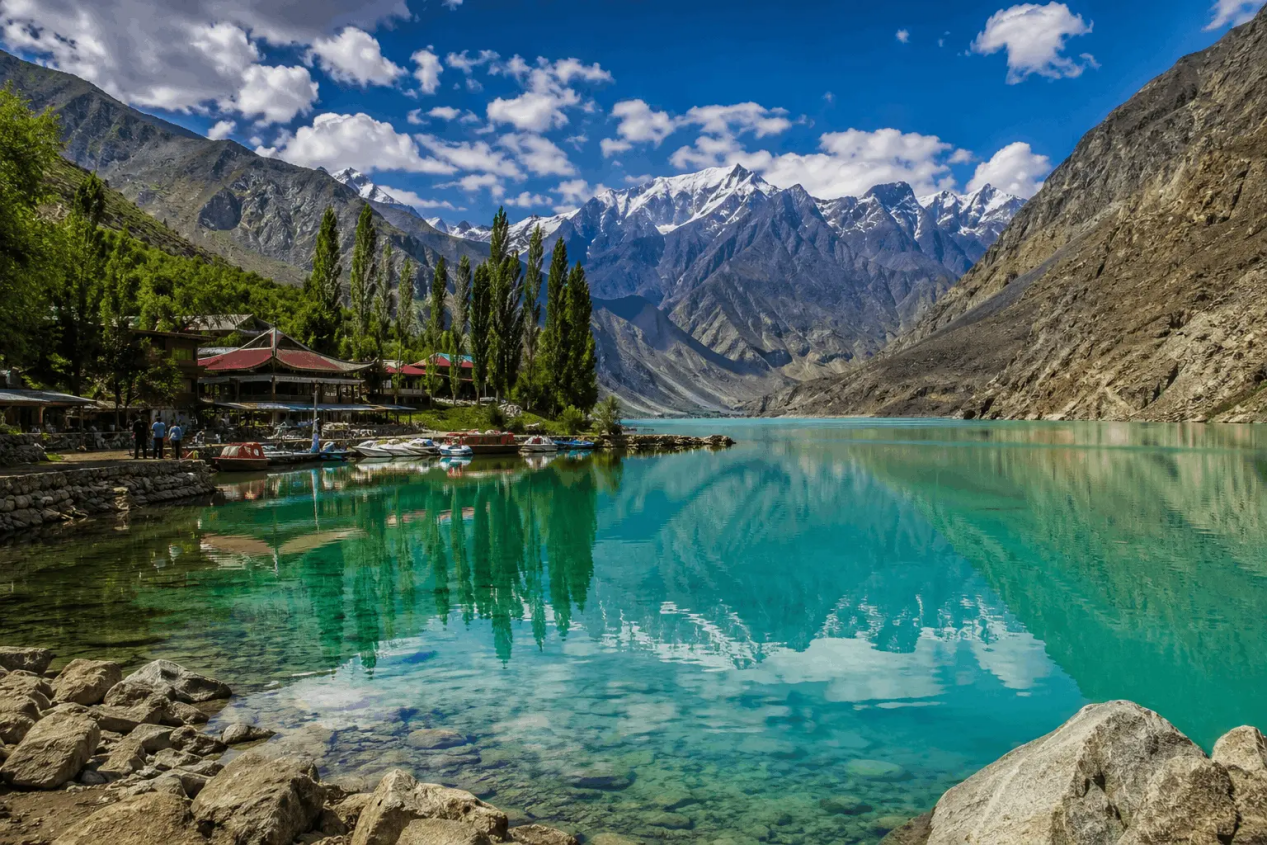
Pakistan’s best places to visit span five very different regions: the glacier-fed valleys of Gilgit-Baltistan, the pine forests of Swat and Kaghan, the Mughal cities of Punjab, the coastal south, and the high desert of Cholistan. If you only have two weeks, Hunza, Skardu, and Lahore give you the fullest picture of the country mountains, history, and culture in one trip.
Pakistan isn’t a single-destination country the way Bali or Santorini is. It’s closer to a continent in miniature, where a five-hour drive can take you from a 700-year-old fort to a turquoise lake sitting at 4,000 meters. That variety is exactly why the “best place” question doesn’t have one answer, it depends on whether you’re chasing mountains, history, food, or a quiet honeymoon spot.
Quick Answer: Top 10 Places in Pakistan for 2026
| Rank | Destination | Best For |
| 1 | Hunza Valley | First-time visitors, photography, cherry blossoms |
| 2 | Skardu | K2 base camp access, lakes, adventure |
| 3 | Fairy Meadows | Nanga Parbat views, trekking, camping |
| 4 | Lahore | History, Mughal architecture, food |
| 5 | Swat & Kalam | Family trips, skiing, rivers |
| 6 | Neelum Valley | Kashmir scenery, alpine lakes |
| 7 | Deosai National Park | Wildlife, wide-open plateau landscapes |
| 8 | Islamabad | Easy access, modern amenities, gateway city |
| 9 | Chitral & Kalash Valleys | Indigenous culture, festivals |
| 10 | Karachi | Coastline, urban energy, museums |
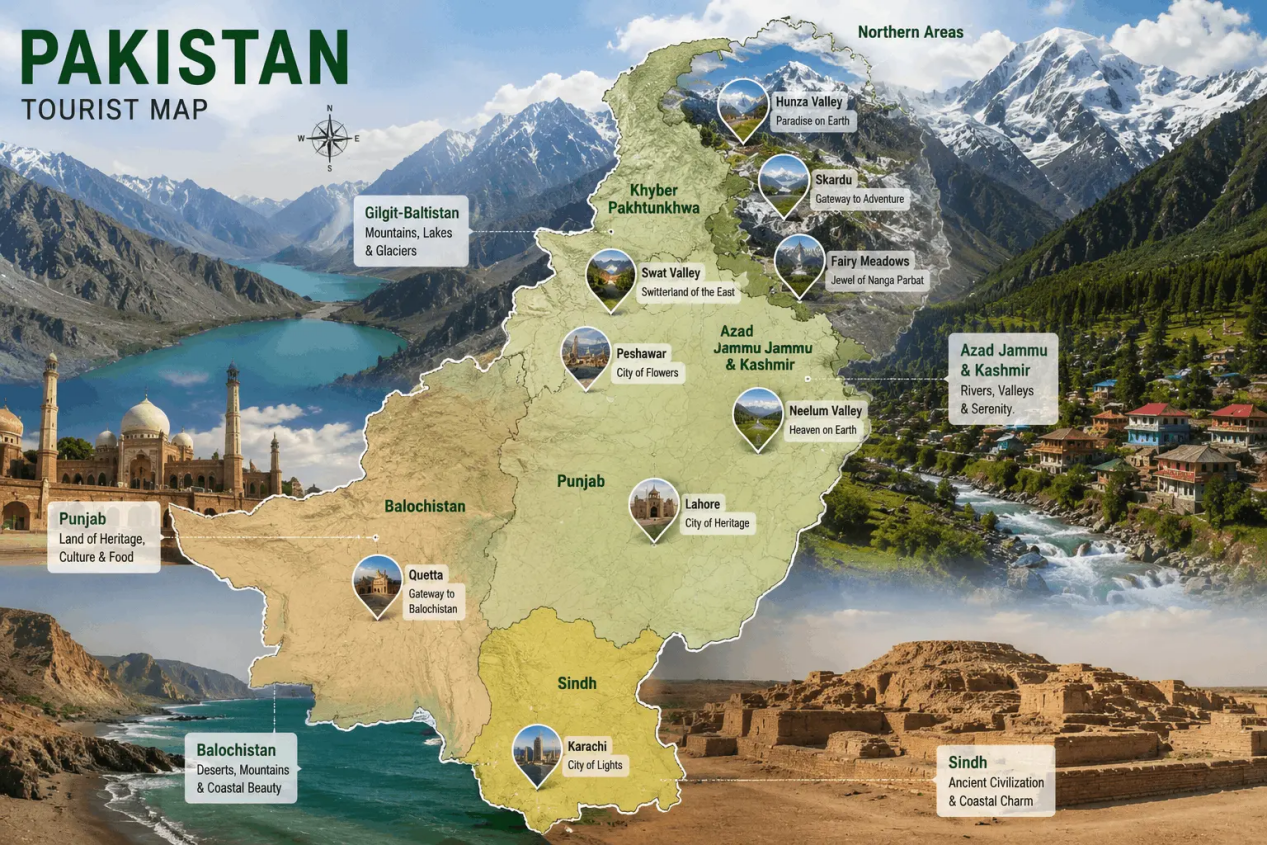
Each of these deserves a closer look, so let’s go region by region.
Is Pakistan Safe to Visit in 2026?
Yes, for the vast majority of tourist routes. The northern circuit Hunza, Skardu, Naran, Swat sees heavy domestic and increasing international tourism, and local hospitality is consistently rated among the best in the world by travelers who’ve been. Security has improved substantially in tourist zones over the past decade, and areas like Gilgit-Baltistan operate with a visible, low-friction security presence rather than restriction.
That said, safety is regional, not national. Parts of Balochistan and areas near the Afghan border in Khyber Pakhtunkhwa carry travel advisories from Western governments, and it’s worth checking your country’s current guidance before finalizing an itinerary conditions there can shift. If you stick to the northern tourist corridor, Punjab’s major cities, and standard Sindh attractions, you’re following the same route the overwhelming majority of foreign travelers already take without incident.
For US citizens specifically: a visa is required in advance; Pakistan does not offer visa-free entry to American passport holders. Processing is done online through Pakistan’s e-visa portal, and approval typically covers tourism for a defined stay window. Check current requirements directly with Pakistan’s immigration authority before booking flights, since visa categories and validity periods are updated periodically.
Best Time to Visit Pakistan
The right season depends entirely on which region you’re targeting, since the north and south operate on almost opposite calendars.
Spring (March – May): Cherry blossoms bloom across Hunza, wildflowers appear in the lower valleys, and temperatures are mild everywhere except the high plateaus, which are still snowbound.
Summer (June – August): Peak season for the north. Hunza, Skardu, Fairy Meadows, Deosai, and Naran are all fully accessible, roads are clear, and this is when most domestic tourists travel too — expect crowds at marquee spots like Attabad Lake and Saif-ul-Malook. Southern cities like Karachi and Lahore turn brutally hot and humid in this window, so it’s the wrong time for a Punjab or Sindh-focused trip.
Autumn (September – October): Arguably the sweet spot for the north — golden foliage, thinner crowds, and stable weather, though nights get cold fast at altitude.
Winter (November – February): High-altitude regions largely shut down; roads to Deosai, Fairy Meadows, and Khunjerab Pass close. This is instead the season for Lahore, Islamabad, Karachi, and lower hill stations like Murree, which get pleasant days and occasional snowfall without the summer heat.
Northern Pakistan: Gilgit-Baltistan
This is the region most people mean when they ask about Pakistan’s “best places” — and it earns the reputation. Three of the world’s great mountain systems (the Himalayas, Karakoram, and Hindu Kush) physically converge here, which is not true of anywhere else on the planet.
Hunza Valley
Hunza sits along the old Silk Road, roughly 600 kilometers from Islamabad via the Karakoram Highway. It’s the most infrastructure-ready part of the north, which makes it the sensible first stop for anyone new to Pakistan travel.
What to see: Attabad Lake, a striking turquoise reservoir formed by a 2010 landslide, now popular for boating and jet-skiing. Baltit Fort and Altit Fort, over 700 and 1,100 years old respectively, both offering panoramic valley views. Eagle’s Nest at Duikar, the best sunrise viewpoint over the Karakoram peaks, where Golden Peak catches the first light before eight neighboring summits light up in sequence.
Practical note: Base yourself in Karimabad for three to four days rather than day-tripping in and out, the valley rewards a slower pace, and road conditions mean you don’t want to rush the drive in either direction.
Skardu
Skardu is the launch point for K2 expeditions, but you don’t need mountaineering ambitions to justify the trip. The town sits at 2,286 meters, ringed by the Karakoram range, with a cluster of lakes within easy reach: Shangrila (Lower Kachura), known for its red-roofed restaurant built on a converted aircraft; Upper Kachura, quieter and less commercialized; and Satpara Lake, a 20-minute drive from town.
Shigar Fort, now a heritage hotel showcasing traditional Balti architecture, makes a worthwhile half-day stop if you want cultural context alongside the scenery.
Fairy Meadows
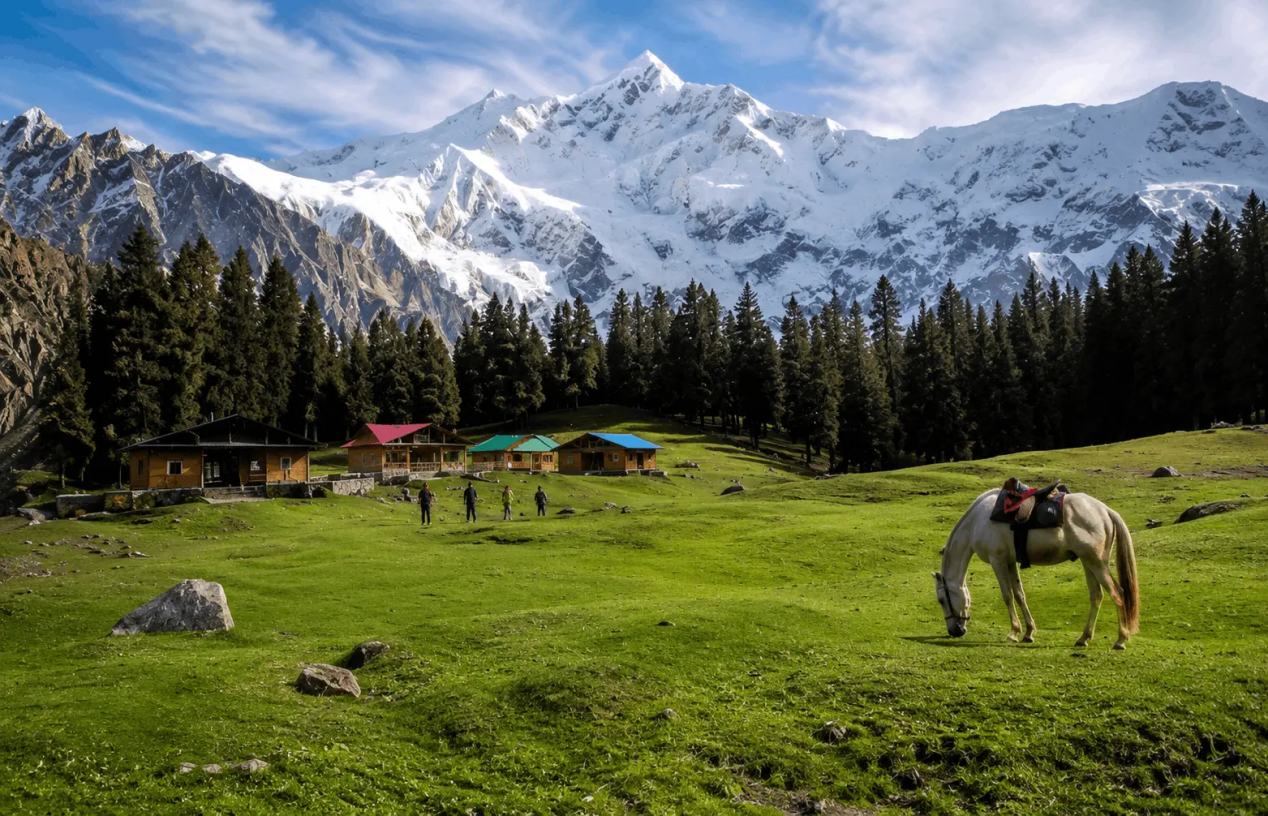
German climbers coined the name — “märchenwiese,” fairy tale meadow and it holds up. Sitting at 3,300 meters at the base of Nanga Parbat (8,126 meters, the world’s ninth-highest peak, nicknamed the “Killer Mountain”), Fairy Meadows requires a jeep ride on one of the more hair-raising roads in the country, followed by a three-to-four-hour trek through pine forest.
The payoff is camping under a clear night sky with Nanga Parbat’s south face directly overhead. Book cottages or campsites ahead during June to August — the small number of options fills quickly in peak season.
Deosai National Park
Deosai means “Land of Giants,” and the name refers to both the scale of the plateau and its resident population of roughly 300 Himalayan brown bears one of the largest concentrations left in the region. Sitting at 4,114 meters between Skardu and Astore, it’s essentially a rolling alpine steppe dotted with wildflowers and glacial streams, with Sheosar Lake as its centerpiece.
There’s no permanent lodging inside the park, so plan on camping or a day trip from Skardu, and pack warm layers regardless of the season — weather at this altitude turns quickly.
Naltar Valley
Less visited than Hunza or Skardu, Naltar is known for three lakes of distinctly different colors green, blue, and turquoise — caused by variations in mineral content in the water. It doubles as a ski destination in winter, giving it a rare dual identity as both a summer trekking spot and a cold-weather resort.
Khyber Pakhtunkhwa: Swat, Kaghan, and Chitral
If Gilgit-Baltistan is Pakistan’s high-altitude showcase, KPK is where the country’s forested, river-valley scenery lives.
Swat and Kalam Valley
Once nicknamed the “Switzerland of the East” by the British, Swat has rebuilt its tourism identity after a difficult security period in the 2000s and is now firmly back on the standard northern circuit. Malam Jabba operates as Pakistan’s main ski resort in winter and runs chairlift rides in summer. Mahodand Lake, a high-altitude lake framed by forest, is one of the more photogenic stops in the region, and Mingora’s Buddhist archaeological sites — including the Butkara Stupa — add a historical layer most visitors don’t expect from a mountain valley.
Naran and Kaghan Valley
This is the most accessible alpine scenery in the country, following the Kunhar River for about 150 kilometers without requiring serious trekking experience. Saif-ul-Malook Lake, wrapped in local legend and framed by Malika Parbat, is Pakistan’s single most photographed lake. Babusar Pass, at 4,173 meters, connects the valley to Chilas and the Karakoram Highway beyond.
Chitral and the Kalash Valleys
Chitral offers something genuinely distinct: the Kalash people, one of the smallest and most culturally distinct communities in Asia, who maintain pre-Islamic animist traditions, colorful seasonal festivals (Chilam Joshi in spring, Uchao in summer, Choimus in winter), and a visual culture including the women’s traditional dress unlike anything else in the country. Visiting respectfully means dressing modestly and asking permission before photographing residents.
Azad Kashmir: Neelum Valley
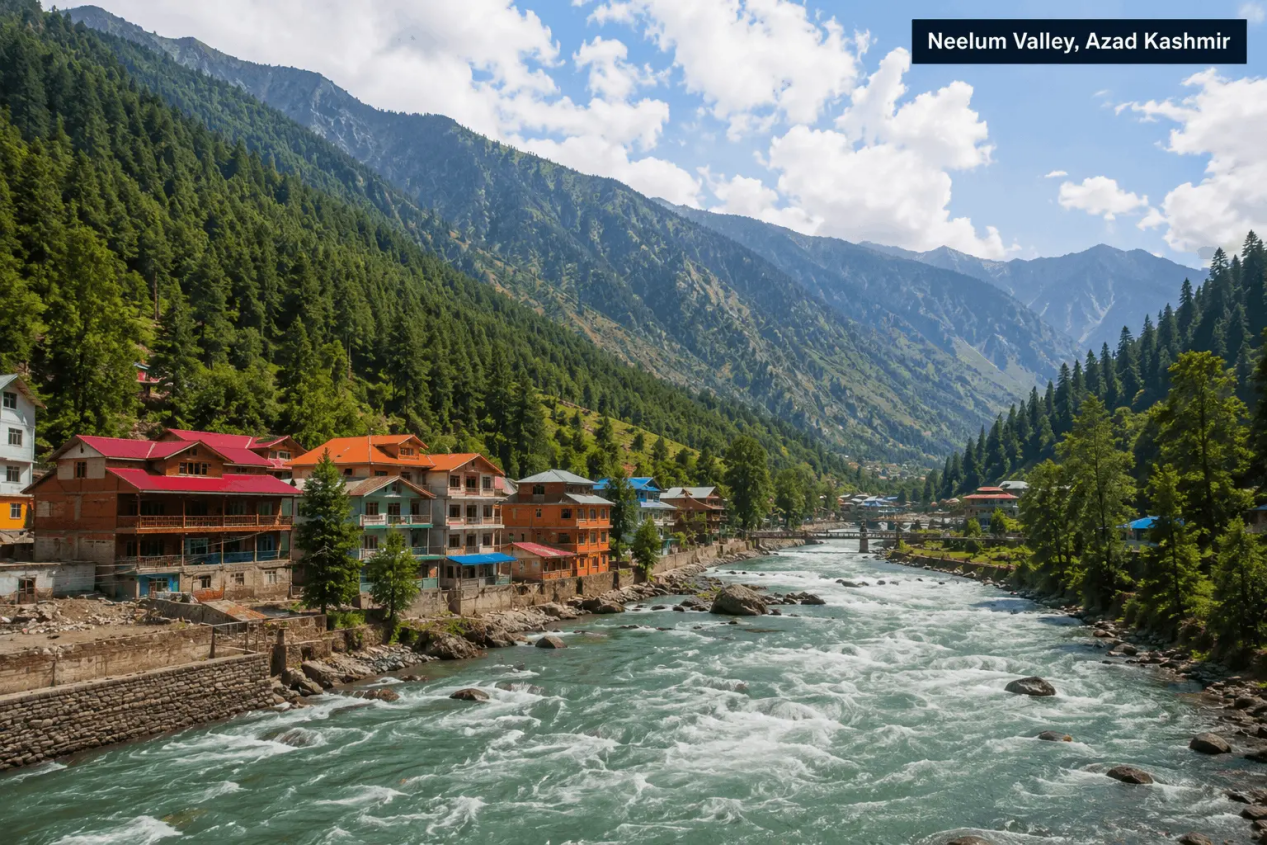
Running alongside the Neelum River for 144 kilometers, this valley is often described locally as Kashmir’s most scenic stretch. Ratti Gali Lake requires a moderate trek through wildflower meadows to reach, while Arang Kel, a hilltop village reached by chairlift, gives sweeping views without the physical effort. Sharda adds a historical dimension as an ancient Buddhist learning center with surviving ruins.
Punjab: History, Food, and Culture
Punjab is where Pakistan’s Mughal-era architecture is concentrated, and it operates on a completely different travel rhythm than the north — no jeeps, no altitude concerns, just cities.
Lahore
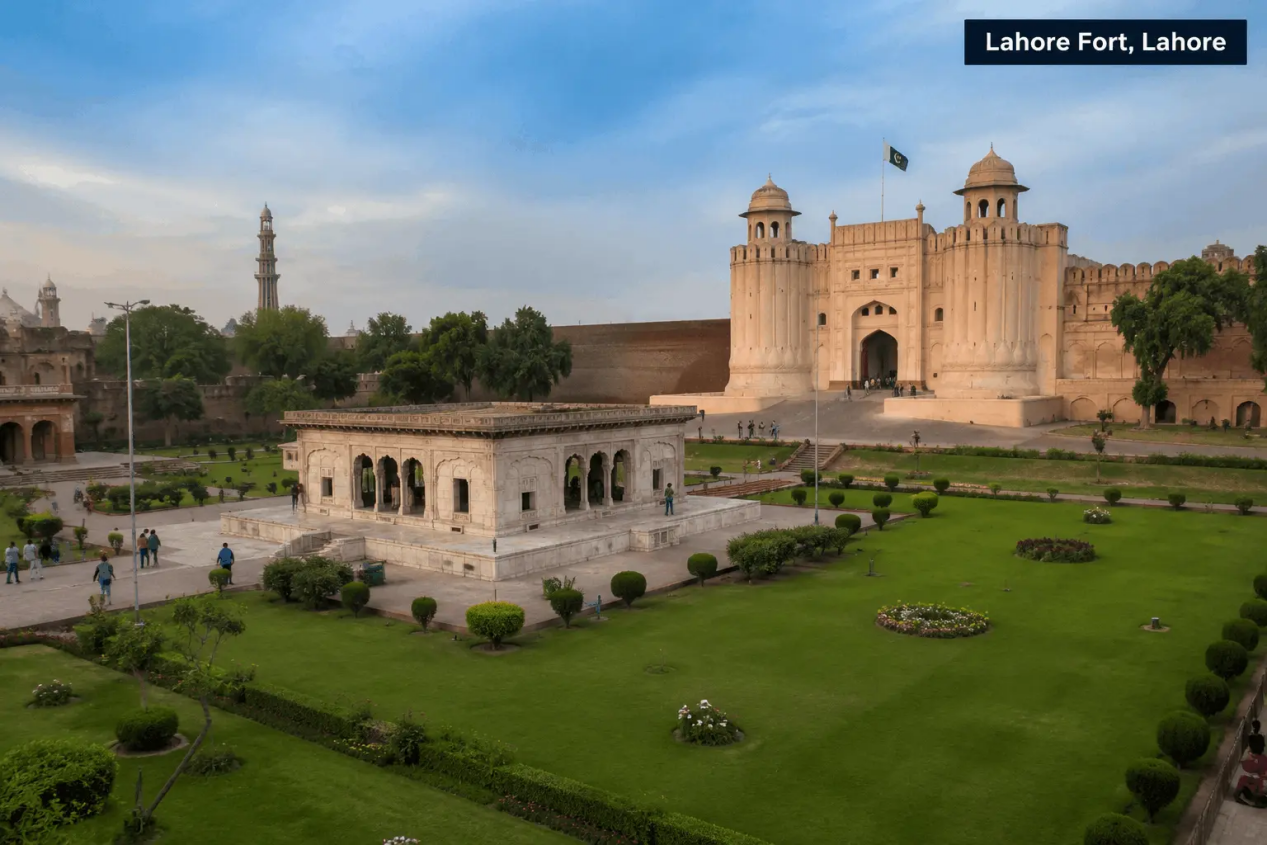
Lahore is Pakistan’s cultural capital, and locals will tell you as much without hesitation. The Badshahi Mosque and Lahore Fort anchor the old walled city, the latter covering more than 20 hectares and including the Sheesh Mahal (Palace of Mirrors), built for the imperial family’s private use. Beyond the monuments, Lahore’s food scene — particularly its street food around the old city — is frequently cited as the country’s best, and a half-day dedicated purely to eating is not wasted time here.
Islamabad
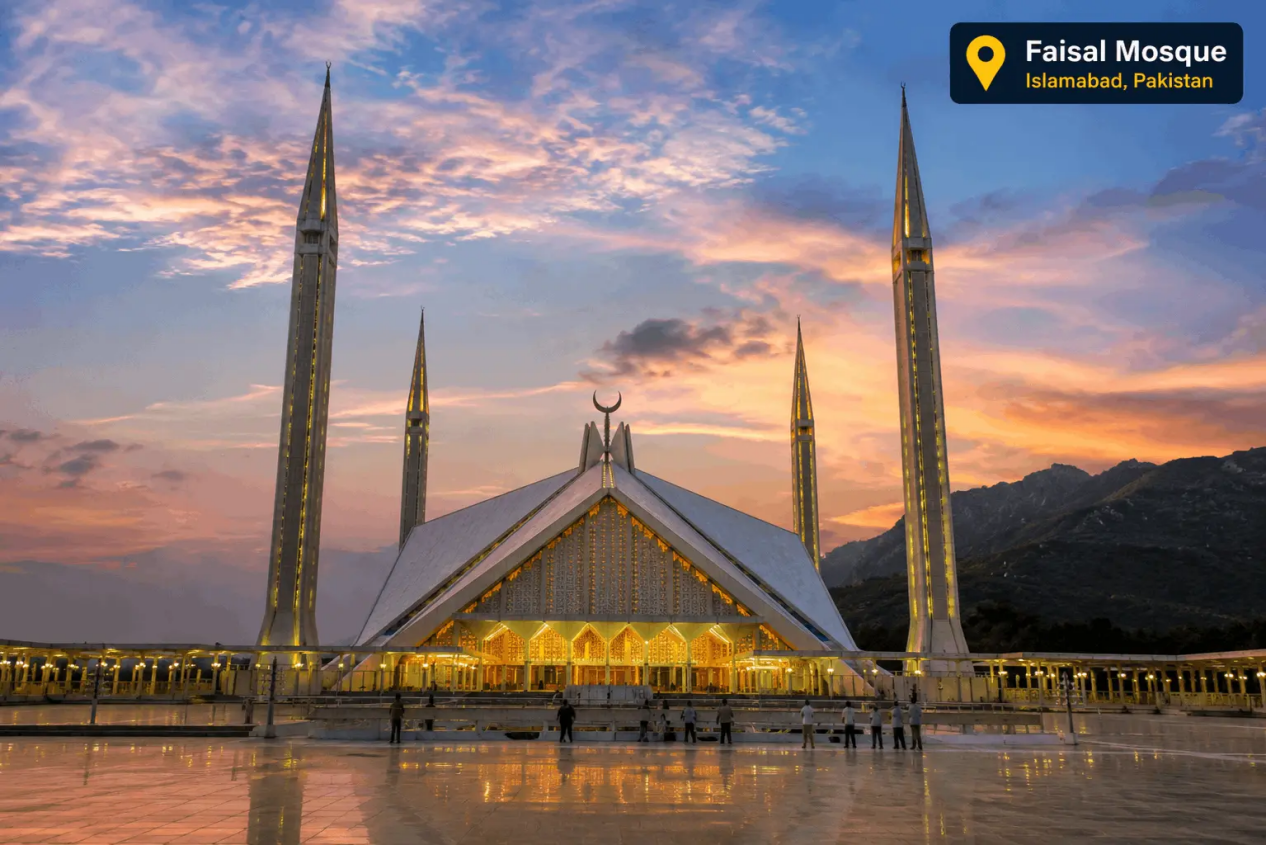
As Pakistan’s purpose-built capital since 1967, Islamabad reads as noticeably more modern and orderly than Lahore or Karachi. Faisal Mosque, one of the largest mosques in South Asia, is the city’s signature landmark, and the Margalla Hills National Park behind it offers genuinely good day hikes — Trail 5 and the Daman-e-Koh viewpoint are the two most walked. Islamabad also functions as the practical gateway to Taxila’s Buddhist ruins and the hill stations of Murree and Nathiagali, all within roughly ninety minutes’ drive.
Murree
Murree is the easy, low-effort hill station option — two hours from Islamabad, with a colonial-era hill town feel, decent winter snowfall, and Patriata’s chairlift as the main attraction. It’s not a substitute for the drama of the north, but it’s the right call if you have limited time or are traveling with people who don’t want a demanding itinerary.
Sindh and Balochistan: Coast and Ancient History
Karachi
Pakistan’s largest city and its economic engine sits on the Arabian Sea. Clifton Beach, Mohatta Palace, and the Mausoleum of Muhammad Ali Jinnah are the standard stops, and the city’s diversity — a product of its port history shows up clearly in its food scene.
Mohenjo-Daro
Located in Sindh near Larkana, Mohenjo-Daro is one of the earliest major urban settlements in human history, part of the Bronze Age Indus Valley Civilization dating back roughly 4,500 years. It’s a genuinely different kind of stop from anything in the north — flat, archaeological, and historically significant rather than scenic — worth the detour if ancient history interests you more than mountain views.
Choosing Places by Travel Style
Not every “best places” list applies equally to every traveler. Here’s how the destinations above map to different priorities.
Family travel: Naran, Swat, and Murree offer scenery without demanding treks or high-altitude camping — good road access, established hotels, and shorter drive segments make them easier with kids than Fairy Meadows or Deosai.
Honeymoon: Hunza’s combination of dramatic views and comfortable, boutique-style accommodation in Karimabad makes it the most commonly recommended honeymoon base, with Neelum Valley as a quieter alternative.
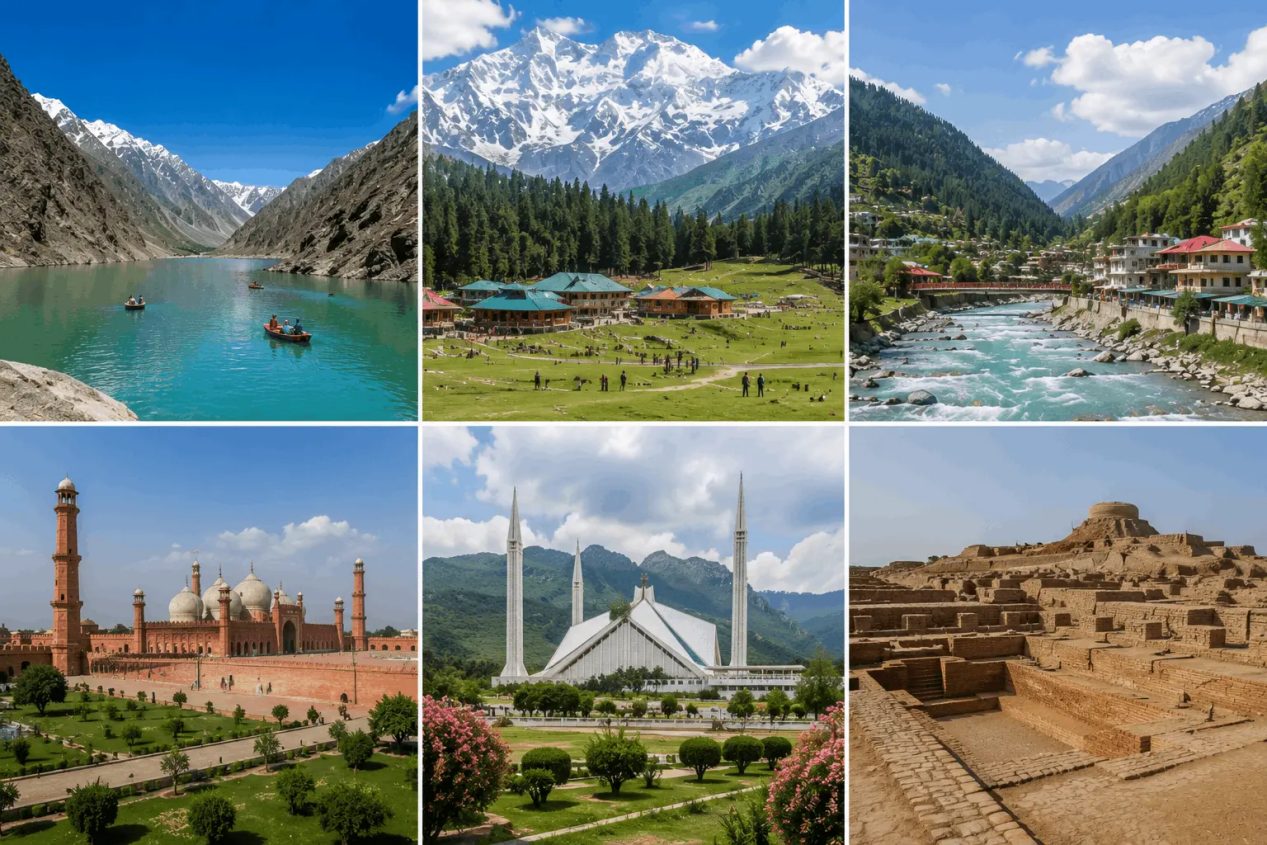
Budget backpacking: Northern Pakistan is unusually affordable by global standards jeep hire, guesthouses, and local food keep daily costs low, though transport (not accommodation) is usually the largest line item because of the terrain.
Adventure and trekking: Skardu and Deosai are the serious options — K2 base camp treks, Katora Lake in Kumrat Valley, and the Karakoram’s technical routes all start from this region.
What Pakistan Travel Actually Costs
Costs vary sharply by region and by whether you’re traveling independently or through a tour operator. A few concrete reference points from the north:
- Deosai National Park entry: roughly 500 PKR for locals, around 40 USD for foreign nationals
- Khunjerab Pass entry: about 1,000 PKR for locals, around 30 USD for foreign nationals
- Jeep hire for rougher routes (Fairy Meadows, Kumrat, Minimarg): typically 12,000–25,000 PKR round trip depending on distance and terrain
- Shangrila Resort entry: around 1,000–1,500 PKR
Foreign nationals should expect noticeably higher park and heritage-site fees than domestic tourists — this is standard practice across Pakistan’s tourism sector, not an anomaly.
Common Mistakes First-Time Visitors Make
Underestimating travel time. Distances on a map look short until you factor in mountain roads. Islamabad to Hunza is roughly 600 kilometers but takes most of a day; rushing this stretch to save a night’s hotel cost usually backfires.
Skipping altitude acclimatization. Many northern destinations sit above 3,000 meters. Ascend gradually where possible, and don’t schedule Deosai or Khunjerab Pass immediately after a long travel day with no buffer.
Assuming ATMs will be available. Cash is scarce outside major towns in Gilgit-Baltistan. Carry more than you think you’ll need before heading into remote valleys.
Booking peak-season accommodation late. June through August fills fast in Hunza, Skardu, and Fairy Meadows specifically because domestic travel volume overlaps with the small international season.
Frequently Asked Questions
What is the best place to visit in Pakistan?
Hunza Valley is the most commonly recommended first destination, combining accessible infrastructure with the country’s signature mountain scenery. For history and food, Lahore is the equivalent single answer in the south.
Is Pakistan safe to visit in 2026?
Yes, along the established tourist corridor — Gilgit-Baltistan, Swat, Punjab’s major cities, and standard Sindh sites. Border-adjacent parts of Balochistan and Khyber Pakhtunkhwa carry advisories worth checking before travel.
Can Americans travel to Pakistan without a visa?
No. US citizens need an e-visa arranged in advance through Pakistan’s official immigration portal; there’s no visa-free entry for US passport holders.
What is the best month to visit Pakistan’s northern areas?
June through September for full road access, or April–May and September–October for similar scenery with fewer crowds and milder crowds at high-traffic spots.
How many days do you need for a complete Pakistan tour?
Two weeks covers a solid northern loop (Islamabad, Hunza, Skardu) plus Lahore. A more complete trip including Swat, Kashmir, and the south typically needs three to four weeks.
Is K2 located in Pakistan?
Yes. K2, the world’s second-highest mountain at 8,611 meters, sits in the Karakoram range within Gilgit-Baltistan, Pakistan, on the border with China.
Which part of Pakistan is safest for tourists?
Gilgit-Baltistan and the established northern tourist circuit generally carry the fewest security concerns and the most consistent tourism infrastructure.
What are the must-see places in Pakistan for a first trip?
Hunza Valley, Skardu, Fairy Meadows, Lahore, and Islamabad cover the essential range — mountains, adventure, Mughal history, and a modern capital in one trip.