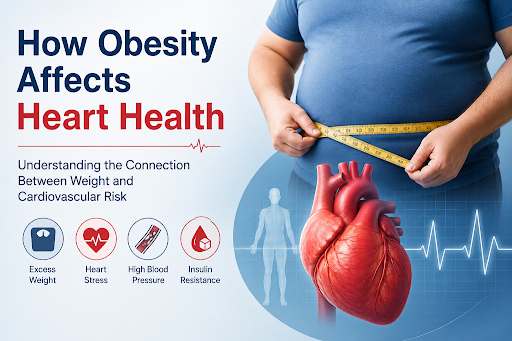
Obesity is more than a condition associated with excess body weight. It is a complex metabolic condition that can affect blood pressure, blood glucose, lipid metabolism, inflammation, and cardiac function. These changes can increase the risk of cardiovascular disease, including coronary artery disease, heart failure, atrial fibrillation, and stroke.
Understanding how excess body fat affects the cardiovascular system is important because cardiovascular risk is influenced not only by how much a person weighs, but also by where fat is stored and by the presence of other metabolic risk factors.
How Does Obesity Increase Cardiovascular Risk?
Adipose tissue is biologically active. It produces hormones, inflammatory mediators, and other signaling molecules that influence the cardiovascular and metabolic systems. When excess adipose tissue accumulates—particularly around the abdominal organs—these biological effects can become clinically significant.
Obesity is strongly associated with several established cardiovascular risk factors, including hypertension, insulin resistance, abnormal cholesterol levels, and type 2 diabetes. These conditions can interact over time, accelerating vascular damage and increasing the workload placed on the heart.
The relationship is therefore not simply mechanical. Excess body weight can initiate a series of metabolic and physiological changes that gradually increase cardiovascular risk.
Obesity and High Blood Pressure
Hypertension is one of the most important cardiovascular complications associated with obesity.
As body mass increases, the cardiovascular system must supply a larger amount of metabolically active tissue. Obesity can also affect kidney function, sodium retention, sympathetic nervous system activity, and hormonal pathways involved in blood-pressure regulation.
Persistently elevated blood pressure places additional stress on arterial walls and forces the heart to work harder. Over time, this can contribute to thickening of the heart muscle, arterial disease, heart failure, heart attack, and stroke.
For this reason, people with obesity should have their blood pressure monitored regularly rather than relying on body weight alone as an indicator of cardiovascular health.
The Role of Insulin Resistance and Diabetes
Another important connection between obesity and cardiovascular disease is insulin resistance.
When excess adipose tissue accumulates, particularly visceral fat, cells may become less responsive to insulin. The pancreas initially compensates by producing more insulin, but persistent insulin resistance can eventually contribute to elevated blood glucose and type 2 diabetes.
Diabetes is a major cardiovascular risk factor. Chronic elevation of blood glucose can impair blood-vessel function and contribute to atherosclerosis—the buildup of fatty and inflammatory material within arterial walls.
Consequently, obesity, insulin resistance, diabetes, and cardiovascular disease can form a closely connected metabolic pathway.
Why Abdominal Fat Matters
Body-fat distribution is an important consideration when evaluating cardiovascular risk.
Visceral fat is stored around internal organs, whereas subcutaneous fat is located beneath the skin. Greater amounts of visceral fat are associated with metabolic abnormalities such as insulin resistance, elevated triglycerides, and hypertension.
This helps explain why two people with the same body mass index (BMI) may not have identical cardiovascular risk.
BMI remains a useful screening measure because it relates body weight to height and provides a standardized way to identify weight categories. However, it does not distinguish between muscle, subcutaneous fat, and visceral fat.
For an initial assessment of weight status, a BMI Calculator can provide a convenient estimate based on height and weight. However, the resulting BMI should be interpreted as one part of an overall health assessment rather than as a diagnosis of obesity or cardiovascular disease.
Waist circumference, blood pressure, blood glucose, cholesterol levels, physical activity, family history, and other clinical factors can provide additional information about cardiovascular risk.
Can Obesity Affect the Heart Directly?
Yes. Obesity can place additional hemodynamic demands on the cardiovascular system.
People with significant excess body mass may have increased blood volume and cardiac output requirements. Over time, these demands can contribute to structural changes in the heart, including enlargement or thickening of the left ventricle.
Initially, these adaptations may help the cardiovascular system meet increased physiological demands. Persistent stress, however, can eventually impair cardiac function and contribute to heart failure.
Obesity is also associated with conditions such as hypertension, obstructive sleep apnea, diabetes, and chronic kidney disease. These conditions can further increase cardiovascular strain and complicate the management of heart disease.
Obesity and Abnormal Heart Rhythms
The cardiovascular effects of obesity also extend to heart rhythm.
Obesity is associated with an increased risk of atrial fibrillation, a common arrhythmia characterized by an irregular heartbeat. Atrial fibrillation can impair the heart’s efficiency and increase the risk of blood-clot formation and stroke.
Several mechanisms may contribute to this association, including hypertension, inflammation, enlargement of the atria, sleep-disordered breathing, and metabolic abnormalities.
Evidence also suggests that appropriate weight management may reduce the burden of atrial fibrillation in people with obesity. This illustrates an important principle: improving metabolic health can have cardiovascular benefits beyond simply reducing body weight.
Is a BMI Calculator Enough to Assess Heart Health?
A BMI Calculator can be useful for estimating BMI, but BMI should not be interpreted as a complete measure of cardiovascular health.
BMI is calculated from height and weight, making it a convenient screening tool for identifying whether an individual’s weight falls within an underweight, healthy-weight, overweight, or obesity category. However, the measurement does not reveal body-fat distribution or directly measure metabolic health.
For example, a person with a relatively high BMI may have substantial muscle mass, while another individual with a lower BMI may have a high proportion of visceral fat.
Therefore, BMI should be viewed as a starting point rather than a diagnosis.
A more comprehensive cardiovascular assessment may include:
- BMI and waist circumference
- Blood pressure
- Blood glucose or HbA1c
- Cholesterol and triglyceride levels
- Physical activity
- Dietary habits
- Smoking status
- Sleep quality
- Family history
- Existing cardiovascular or metabolic conditions
This broader approach allows healthcare professionals to assess cardiovascular risk more accurately than relying on a single measurement.
Can Weight Management Improve Heart Health?
For people with overweight or obesity, appropriate weight management can improve several cardiovascular risk factors.
Research has demonstrated that weight reduction can improve blood pressure, glucose regulation, and lipid profiles in many individuals. Regular physical activity can also improve cardiovascular fitness, insulin sensitivity, and blood pressure, even when substantial weight loss does not occur.
Importantly, obesity management should not be approached as a short-term dieting challenge. Obesity is influenced by biological, behavioral, environmental, genetic, and socioeconomic factors. Sustainable management may involve dietary changes, regular physical activity, behavioral interventions, prescription medications, or metabolic and bariatric procedures when clinically appropriate.
The objective should be better long-term health and reduced cardiovascular risk—not simply achieving a particular number on the scale.
Practical Steps for Protecting Cardiovascular Health
People can take several evidence-based steps to reduce cardiovascular risk.
A heart-healthy lifestyle generally includes regular physical activity, a diet rich in vegetables, fruits, whole grains, healthy protein sources, and unsaturated fats, adequate sleep, avoidance of tobacco, and appropriate management of blood pressure and cholesterol.
People who are concerned about their weight can begin by assessing basic measures such as BMI and waist circumference. A BMI Calculator can be used as a convenient first step to understand how weight relates to height, but the result should be considered alongside other health indicators.
Individuals with obesity, hypertension, diabetes, cardiovascular disease, or a strong family history of heart disease should discuss their individual risk factors with a qualified healthcare professional.
Conclusion
Obesity can affect the cardiovascular system through several interconnected mechanisms. It can contribute to hypertension, insulin resistance, abnormal lipid levels, chronic inflammation, vascular dysfunction, structural changes in the heart, heart failure, and abnormal heart rhythms.
However, body weight alone does not determine cardiovascular health. A BMI Calculator provides a practical way to estimate BMI and assess weight status, but BMI should be interpreted alongside waist circumference, metabolic markers, blood pressure, lifestyle factors, and medical history.
The most useful approach is therefore to look beyond the number on the scale and consider overall cardiometabolic health. Early assessment, sustainable lifestyle changes, and appropriate medical care can play an important role in reducing cardiovascular risk associated with obesity.
Medical disclaimer: This article is intended for educational purposes and does not replace individualized medical advice, diagnosis, or treatment. People with concerns about their weight or cardiovascular health should consult a qualified healthcare professional.