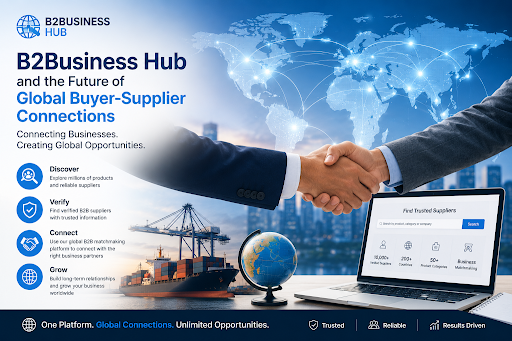
Global trade is becoming faster, more digital, and more connected. Buyers no longer want to spend weeks searching through scattered websites, outdated contact lists, and unverified company profiles. Suppliers also need better ways to reach serious buyers without wasting time on low-quality leads.
B2Business Hub reflects this new direction in international sourcing. By bringing buyers and suppliers into a more organized digital environment, platforms of this kind can simplify the early stages of business relationships.
The future of buyer-supplier connections will depend on trust, speed, transparency, and relevance. Businesses that can access useful supplier information and connect with companies that match their needs will be better positioned to grow internationally.
Why Global Sourcing Is Changing
Traditional sourcing methods still have value, but they can be slow and expensive. A buyer searching for manufacturers in another country may need to contact trade associations, attend exhibitions, hire agents, or browse hundreds of company websites. Even after finding a potential supplier, the buyer must check whether the business is legitimate, capable, responsive, and suitable for the required order.
Digital platforms are making this process easier. A well-organized b2b supplier directory can place a large number of supplier profiles in one searchable environment. Buyers can narrow their search by industry, location, product category, company type, or other practical criteria.
Digital sourcing tools reduce the time between identifying a need and starting a serious supplier conversation.
The Growing Importance of Verified Business Information
Trust remains one of the biggest challenges in international trade. A polished website does not always prove that a supplier has the production capacity, registration status, experience, or quality systems it claims to have.
For this reason, buyers increasingly want tools that help them find verified B2B suppliers rather than simply presenting long lists of companies.
Useful verification details may include:
- Business registration information
- Company location and contact details
- Product categories and production capabilities
- Certifications or compliance information
- Export experience and target markets
- Business history and profile completeness
Verification does not replace proper due diligence. Buyers should still review documents, request samples, check references, and assess commercial terms. However, verified information can help businesses avoid wasting time on unsuitable or questionable suppliers.
How B2Business Hub Supports Better Connections
B2Business Hub represents a broader movement toward centralized business discovery and professional matchmaking. Its value lies in helping companies present what they offer while allowing buyers to search for partners based on genuine commercial needs.
Instead of beginning with a general search engine, the buyer can use a business-focused platform designed specifically for company discovery.
Suppliers also benefit from this structure. Smaller manufacturers and exporters often struggle to gain visibility outside their home markets. A strong profile on B2Business Hub can help them present their products, capabilities, and experience to international buyers who may otherwise never discover them.
For buyers, this means easier comparison and more focused outreach. For suppliers, it means stronger visibility among businesses already searching for relevant products. As digital trade expands, these advantages can turn online discovery from a simple directory function into a practical source of long-term commercial growth.
From Supplier Listings to Intelligent Matchmaking
The next stage of digital trade is not simply about collecting more company profiles. It is about creating better matches.
A global B2B matchmaking platform can connect companies according to product requirements, sourcing regions, order needs, industry categories, and commercial interests. This is far more useful than showing every buyer the same long list of suppliers.
A smarter platform can highlight suppliers that meet specific conditions instead of forcing the buyer to contact dozens of companies manually.
As these platforms develop, matchmaking may become more personalized. Buyers could receive suggestions based on previous searches and sourcing preferences, while suppliers could receive inquiries that more closely match their actual capabilities.
Better Search Creates Better Opportunities
Search quality is one of the most important features of any business platform. If users cannot quickly find relevant companies, even a large database becomes difficult to use.
A modern b2b supplier directory should help buyers move from broad exploration to a focused shortlist. Categories should be clear, profiles should provide useful details, and search tools should support practical sourcing decisions.
When important supplier information is easy to find, buyers are more likely to contact suitable companies.
Better search therefore improves both user experience and lead quality. Suppliers receive inquiries from buyers with stronger intent, while buyers spend less time sorting through irrelevant options.
Transparency Builds Confidence Across Borders
International buyers often hesitate because they cannot easily judge a company they have never met. Transparency helps reduce that uncertainty. Detailed profiles, accurate product information, clear business descriptions, and reliable contact details allow buyers to evaluate potential partners before making direct contact.
Suppliers benefit too. A company that clearly explains its capabilities, production range, certifications, export markets, and business terms is more likely to attract serious inquiries.
B2Business Hub and similar platforms can encourage this behavior by making complete profiles more valuable than incomplete listings. When companies provide better information, the entire marketplace becomes easier to navigate.
Digital Communication Will Matter More
Finding a supplier is only the first step. Buyers and suppliers must also exchange specifications, discuss pricing, confirm quantities, ask questions, and build trust.
Future business platforms will likely place greater emphasis on integrated communication. Instead of moving immediately between email, messaging apps, spreadsheets, and separate file-sharing tools, users may manage more of the early sourcing process in one place.
Better communication is especially useful when businesses operate across different time zones. Clear written requests and organized conversations reduce misunderstandings and help both sides decide whether an opportunity is worth pursuing.
Why Smaller Businesses May Benefit Most
Large corporations often have procurement teams, international offices, and established supplier networks. Small and medium-sized businesses usually have fewer resources.
Digital platforms can narrow this gap. A small importer can use a global B2B matchmaking platform to discover suppliers without paying for frequent international travel. A growing manufacturer can present its products to overseas buyers without maintaining sales offices in multiple countries.
An exporter entering a new market can also use business directories to identify distributors, wholesalers, and potential commercial partners.
They make international business discovery available to companies that may otherwise remain limited to local or regional markets.
Building Stronger Buyer-Supplier Relationships
Technology can improve discovery, but successful trade still depends on relationships. Buyers want suppliers who communicate clearly, meet quality expectations, deliver on time, and solve problems professionally. Suppliers want buyers who provide accurate requirements, negotiate fairly, and follow agreed payment terms.
Businesses can improve results by creating complete profiles, responding quickly, asking detailed questions, and confirming expectations before an order begins. Buyers should continue to verify documents, request samples, review contracts, and conduct suitable checks. Suppliers should also evaluate buyer credibility before accepting large orders or unusual payment arrangements.
Digital matchmaking works best when technology is combined with sound business judgment.
A More Connected Future for International Business
Global trade will always involve risk, negotiation, and careful decision-making, but finding the right partner is becoming more efficient. Companies no longer have to depend entirely on personal networks, physical trade events, or broad online searches to discover opportunities.
A reliable b2b supplier directory can help buyers explore markets more systematically. Tools that help businesses find verified B2B suppliers can improve confidence during the research stage. A global B2B matchmaking platform can bring together companies with compatible commercial goals, while B2Business Hub can support this shift by creating a more organized space for international business discovery.
The future belongs to platforms that make global connections easier without removing the human judgment needed to build strong commercial relationships. When accurate information, intelligent search, clear communication, and responsible verification come together, buyers and suppliers can spend less time searching and more time building partnerships that create lasting value.