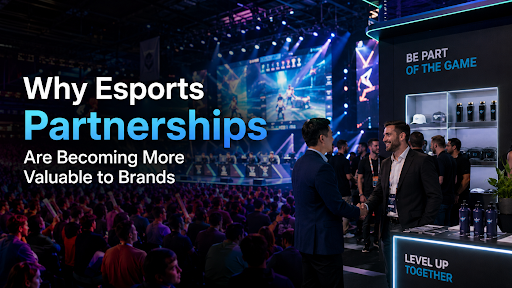
In an afternoon, a company can brand a broadcast of an esports tournament. A company can have its name tattooed on an esports broadcast in an afternoon. The other, more difficult question is which people remembered it, cared about it, and associated the brand with something they enjoyed.
That question is changing sponsorship. Better esports deals now involve more than a logo on a desk or jersey. Brands are supplying equipment, building fan areas, helping run events, making content with players, and sometimes staying with the same property for years.
The value is becoming less about being visible for a few seconds and more about having a useful reason to be there.
A Gaming Audience Is Not One Audience
A third error frequently surfaces in sponsorship planning that everyone who plays or watches games is considered to be in the same group.
They are not.
A Counter-Strike fan following IEM Cologne may have little in common with someone who mainly watches mobile esports in Southeast Asia.
YouGov’s esports audience work makes a similar point. Global reach alone is not enough for a brand deciding where to spend. Regional and local interest can matter just as much because many sponsorship budgets are tied to particular markets.
That can make a smaller, well-matched audience more useful than a huge one with little connection to the product.
The Best Partnerships Have a Job to Do
Technology brands have an obvious place in esports because the hardware is used in competition.
Lenovo’s 2026 Esports World Cup partnership is a clear example. Legion PCs and monitors were used across competition areas, training facilities, broadcast operations, and fan spaces. Visitors could also try products at the event.
That is different from buying signage. Players use the equipment, and fans see it working under pressure.
The same idea works outside hardware.
DHL has had an involvement in ESL esports since 2018. The partnership was extended to 2024, and DHL continued to organize behind the scenes for the event, as well as leveraging the collaboration with fans and brands for employer branding and recruiting.
Long Renewals Tell a Better Story
New sponsorship announcements always sound optimistic. Renewals are more interesting.
DreamHack and electronics retailer Elgiganten announced a new 5-year deal through 2029 in June ’26 while ensuring the retailer remains a part of DreamHack’s festivals in Sweden. It’s the longest-running retail partnership in the Swedish gaming and esports market, ESL FACEIT Group said.
It also gives fans time to become familiar with the relationship. A company that keeps showing up at the same events becomes part of what regular visitors expect to see.
Live Events Give Sponsors More to Work With
Esports grew through livestreams, but physical events give brands something a display ad cannot.
At a festival, people can experience hardware, engage in a competition, interact with a creator, or hang out in a branded space.
This can be done in partnership with Lamborghini, as they did in their 2026 DreamHack. The carmaker planned physical vehicle displays and sim-racing activities after earlier DreamHack activations.
Fans Are Better Judges Than Exposure Reports
Sponsors used to rely heavily on visibility reports. Those still matter, but they do not tell the whole story.
YouGov’s 2025 sponsorship measurement work argues that exposure is only the starting point. It combines visibility with fan perception because a logo can be seen clearly without improving what people think about the company behind it.
That distinction matters in esports. Fans notice when a campaign feels as though nobody involved understands the game.
Esports Sits Inside a Wider Gaming Economy
Gaming media can therefore attract readers with very different intentions. Someone researching a no deposit bonus casino offer is in a different commercial context from someone watching a Counter-Strike final, even if both subjects sit inside the wider gaming and entertainment market.
For brands, that difference matters. Audience age, country, platform rules, and the reason someone is viewing the content should shape the message.
Broad labels such as “gaming audience” are not enough when regulated categories are involved.
Betting Partnerships Show Why Fit Is Not Enough
Potential partners must be vetted. Teams need integrity programs. Riot-owned broadcasts and social channels remain free from betting ads, and betting logos are not allowed on team jerseys under the program. Teams also have to follow local law and platform rules.
For brands in sensitive categories, a deal has to survive legal, reputational, and audience scrutiny as well as a normal marketing review.
Measurement Is Moving Closer to Business Questions
The old question was, “How many people saw us?”
Now sponsors can ask better ones.
Did people visit the activation? Did they try the product? Did branded content hold attention? Did the audience remember who sponsored the team? Did the partnership help recruitment, retail traffic, or sales in the market that mattered?
Not every sponsor should use the same metric.
DHL can care about employer branding and logistics visibility. Lenovo can care about product use. A retailer may care about traffic around a festival.
The partnership becomes easier to defend when the measurement matches the reason it was bought.
The Strongest Deals Feel Less Like Sponsorship
When Lenovo powers tournament hardware, DHL moves event equipment, or a retailer builds something useful inside a gaming festival, the brand is doing something rather than simply appearing.
Fans still know it is commercial. That is not the problem. The problem is when the relationship has nothing to add.
Esports gives sponsors many ways around that. There are broadcasts, teams, creators, live events, social channels, equipment, and year-round communities.
Conclusion
Esports partnerships are becoming more valuable because the better ones have moved beyond rented logo space.
Brands can become part of the equipment, the event, the content, or the fan experience itself. They can also measure more than visibility and choose communities that fit a specific market.