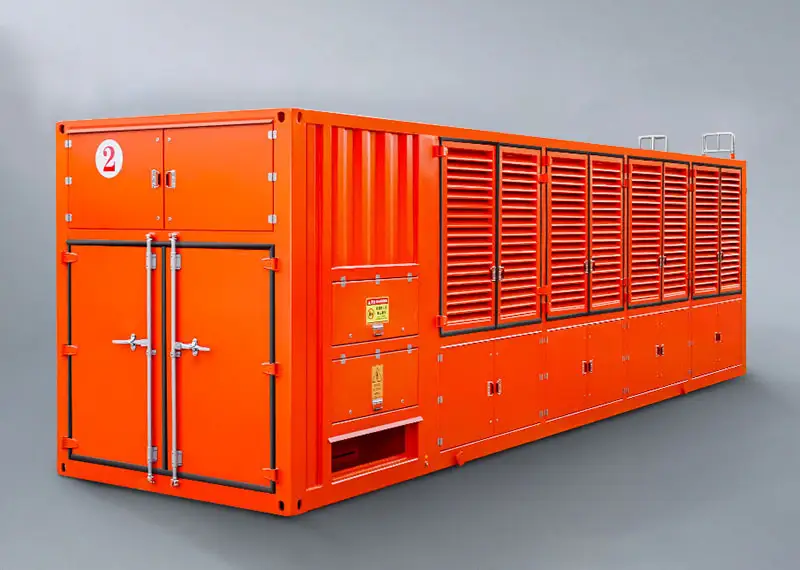
China has become a major source of power testing equipment, RLC load banks included, as more companies look for realistic testing of generators, UPS systems, and power configurations at a cost-effective, customizable price point. Manufacturers there now serve industries spanning data centers, utilities, renewable energy, marine, and industrial plants worldwide.
What Sets RLC Load Banks Apart From Standard Equipment
RLC load banks combine resistive, inductive, and capacitive loads to simulate real-world electrical conditions far more accurately than standard resistive-only equipment, letting facilities test at different power factors that better reflect actual commercial and industrial operating conditions. That means realistic testing at both lagging and leading power factors, a clearer picture of issues like voltage drops, frequency changes, and harmonic distortion that simpler testing might miss, and the ability to create tough test conditions safely without connecting live equipment to the risk.
How to Evaluate a Manufacturer Properly
Choosing the right RLC load bank manufacturer in China isn’t just about finding the lowest price — accuracy, quality standards, support, and export experience all shape how well the equipment performs and holds up over time. A manufacturer handling the full production process in-house — casing, resistor assembly, reactors, capacitors, control panel wiring, and final testing — combined with strict quality checks and traceable components, tends to mean fewer surprises once the equipment arrives and faster installation once it does.
Customization, Quality Control, and Certification
Many Chinese manufacturers specialize in custom-built load banks rather than fixed models, offering configurations around specific power needs, mobility requirements, cooling methods, and control features — containerized or trailer-mounted units, PLC or touchscreen controls, remote monitoring, and modular designs that let load steps be added or removed as needed. Trusted suppliers verify insulation resistance, test load bank functions, and inspect safety before shipment, with some allowing outside inspectors or customer-witnessed testing for extra assurance. Certification matters too, since requirements vary by country — manufacturers who design to standards like IEC and provide clear wiring diagrams, user manuals, and safety labels tend to make installation considerably smoother.
Export Experience and Long-Term Support
Manufacturers experienced in export understand proper packing, labeling, and documentation, and regularly ship to Asia, Europe, the Middle East, Africa, and the Americas — arranging shipping logistics and staying responsive across time zones, which matters especially for large or container-sized equipment. Support shouldn’t stop at delivery, either: remote troubleshooting, spare parts availability, and installation guidance from an experienced supplier all contribute to long-term savings by reducing downtime, avoiding repeated testing, and cutting repair costs over the equipment’s working life.
Where This Equipment Gets Used Globally
Chinese RLC load bank manufacturers supply data centers testing generators and UPS systems before going live, power plants verifying output stability, renewable energy projects working in island or microgrid configurations, and factories confirming backup power readiness. Because these manufacturers routinely adjust designs for different voltage levels, frequencies, and site conditions, customers across very different regions can rely on comparable testing equipment regardless of where they’re located — which, paired with a manufacturer’s genuine engineering experience, is what ultimately gives a business confidence that its power system will perform reliably when it counts.