
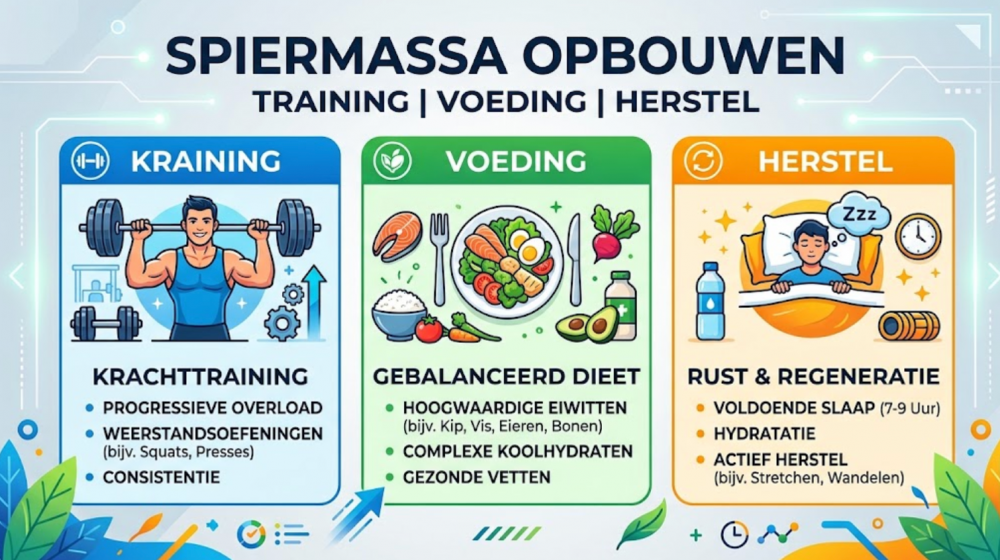
Progress in fitness does not happen only during training. Every challenging workout places stress on the body, while recovery gives the body an opportunity to adapt. Understanding this relationship can help athletes and fitness enthusiasts build more sustainable routines and avoid the common mistake of believing that more training always produces better results.
A well-designed fitness program combines resistance training, cardiovascular activity, nutrition, sleep, and appropriate recovery. When these elements work together, the body can gradually adapt to increasing demands. Recovery therefore deserves the same attention as exercise itself.
Training Creates the Stimulus
Resistance exercise creates a physical stimulus that challenges muscles and other systems. Over time, repeated training can contribute to improvements in strength, endurance, coordination, and overall physical capacity.
However, adaptation requires adequate recovery between demanding sessions. Continuously increasing training volume without allowing sufficient recovery can contribute to excessive fatigue and declining performance.
A smarter approach is to gradually increase training demands while monitoring how the body responds. This allows progression without turning every workout into an unnecessarily exhausting session.
Sleep Is a Major Part of Recovery
Sleep is one of the simplest recovery tools available, yet it is frequently overlooked.
During sleep, the body carries out numerous physiological processes associated with restoration and normal function. Consistently poor sleep can affect energy, concentration, training motivation, and exercise performance.
Creating a regular sleep schedule can therefore complement a structured training program. A consistent bedtime, comfortable sleeping environment, and reduced exposure to stimulating activities before bed can all support better sleep habits.
Recovery should not begin after the workout. It should continue throughout the entire day.
Nutrition Supports Adaptation
Food provides the energy and nutrients required for normal physiological processes and physical activity.
Protein is particularly important because it supplies amino acids used in maintaining and building body tissues. Carbohydrates can provide energy for demanding training sessions, while dietary fats contribute to several essential physiological functions.
Rather than relying on extreme diets, a sustainable approach focuses on adequate nutrition and consistency. Individual requirements vary according to body size, activity level, training demands, and personal goals.
Hydration also deserves attention. Fluid requirements can increase with exercise, particularly during longer or more intense sessions.
Understanding Research Compounds
Modern fitness science also includes research into compounds that interact with specific biological pathways. One area of interest involves substances investigated for their effects on growth-related signaling.
MK-677, also known as Ibutamoren, is an investigational compound that has been studied for its effects on growth hormone secretion and related physiological processes. It is important to distinguish this research from established exercise or nutritional practices.
For researchers examining this compound, MK-677 Ibutamoren 25mg/ml – 50ml is presented by Chemyo Labs as a research-use-only product.
The existence of research interest does not establish a compound as a fitness supplement or demonstrate that it is appropriate for personal use. Research findings need to be interpreted according to study design, population, dosage, duration, and limitations.
Quality Matters in Laboratory Research
Reliable research depends on accurate materials and appropriate documentation. When laboratories investigate a compound, researchers need to understand what material they are evaluating.
This is why analytical information, product specifications, and quality-control procedures can be important considerations in laboratory research.
Chemyo Labs focuses on research-oriented compounds and laboratory information, helping provide a research-focused context for scientists and laboratories evaluating specific materials.
Quality considerations do not replace proper experimental design. Instead, they form one component of a broader research process.
Build Recovery Into Your Routine
Recovery should be planned rather than treated as an afterthought.
For example, a weekly routine might alternate demanding resistance sessions with lighter activity. Walking, mobility work, stretching, and low-intensity cardiovascular exercise can sometimes provide useful movement without adding excessive training stress.
It is also helpful to monitor changes in performance. If strength repeatedly decreases, motivation falls, or fatigue remains unusually high, reducing training volume may be appropriate.
Listening to these signals can help maintain consistency over the long term.
Avoid the “More Is Better” Mentality
Fitness culture often rewards intensity. Hard workouts can feel productive, but constant maximal effort is not necessarily the best strategy.
Progress depends on finding an appropriate balance between stimulus and recovery.
A sustainable program allows difficult sessions while also providing enough time for adaptation. This approach can be more effective than repeatedly training to exhaustion.
The same principle applies to research discussions. Scientific curiosity is valuable, but investigational compounds should not be confused with proven fitness strategies.
The Bigger Picture
Recovery is one part of a much larger fitness system.
Training provides a stimulus. Nutrition supplies energy and nutrients. Sleep supports restoration. Recovery manages fatigue. Consistency allows these elements to accumulate over time.
Research can help scientists understand additional biological mechanisms, including pathways associated with growth and physical function. However, laboratory findings should always be interpreted within their scientific context.
For compounds such as MK-677, research remains distinct from recreational fitness use.
Final Thoughts
A successful fitness routine is built around consistency rather than constant exhaustion. Training hard has value, but recovering intelligently is equally important.
Prioritize structured workouts, adequate nutrition, quality sleep, hydration, and planned rest. Track your progress and adjust your workload when necessary.
Scientific research can provide valuable insights into biological processes, while research-focused organizations such as Chemyo Labs contribute to the availability of materials for laboratory investigation.
Ultimately, sustainable fitness comes from combining good training habits with responsible recovery and evidence-based decision-making.
Research Use Only. Not for Human Consumption.