
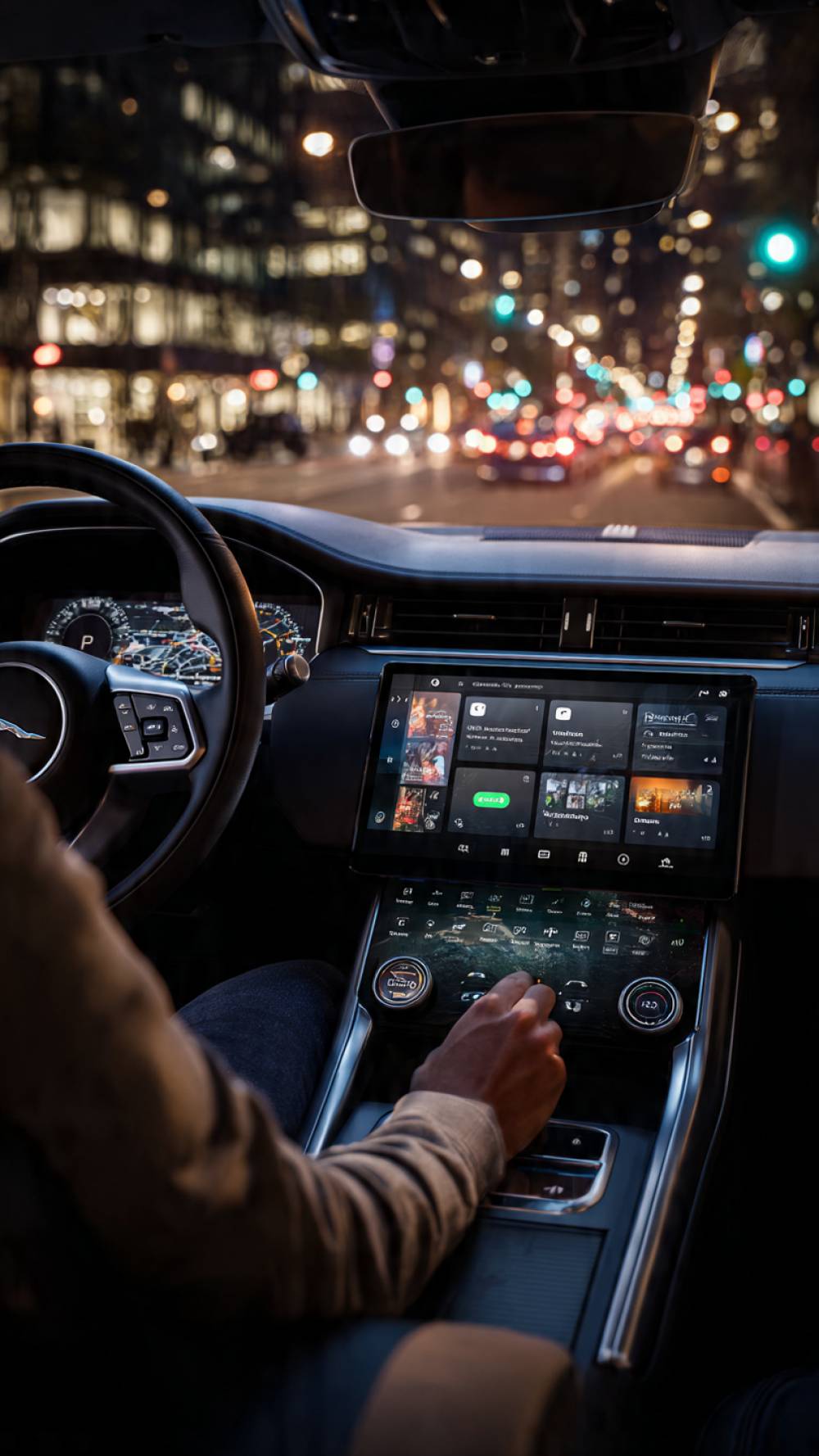
The automotive industry is undergoing a dramatic transformation. For decades, vehicle manufacturers primarily competed through engine performance, fuel efficiency, safety improvements, and design innovation. While these factors remain important, software is increasingly becoming one of the most significant elements that differentiate modern vehicles.
Today's cars are more connected, intelligent, and digitally integrated than ever before. Consumers now expect their vehicles to offer many of the same conveniences they enjoy on smartphones, tablets, and other connected devices. As a result, car brands are investing heavily in software development to enhance vehicle functionality, improve user experiences, and create new revenue opportunities.
Modern vehicles are rapidly evolving into software-defined platforms where digital features play a central role in how drivers interact with their cars. From advanced navigation systems and entertainment options to driver assistance technologies and remote vehicle management, software is reshaping nearly every aspect of the driving experience.
The growing importance of software reflects broader technological changes that are influencing transportation, connectivity, and consumer expectations across the automotive industry.
The Shift Toward Software-Defined Vehicles
Traditionally, a vehicle's capabilities were largely determined by its physical hardware. Once a car left the factory, its features remained mostly unchanged throughout its lifespan.
Today, software-defined vehicles are changing that model. These vehicles rely on software platforms that control and manage a wide range of functions, from infotainment systems to safety technologies.
Instead of requiring physical modifications to add new capabilities, manufacturers can introduce improvements through software updates. This flexibility allows vehicles to evolve long after purchase.
The shift toward software-defined vehicles enables car brands to deliver more dynamic products while responding more quickly to customer needs and technological advancements.
Meeting Changing Consumer Expectations
Consumer expectations have changed significantly in the digital age.
People have become accustomed to devices that receive regular updates, introduce new features, and provide personalized experiences. Smartphones, streaming services, and smart home devices have set new standards for convenience and functionality.
As consumers spend more time interacting with digital technologies, they increasingly expect similar experiences inside their vehicles.
Car brands are adding software features to meet these expectations. Drivers now want intuitive interfaces, voice assistants, smartphone integration, real-time navigation, and personalized settings that enhance convenience and usability.
Meeting these demands has become essential for maintaining customer satisfaction and brand competitiveness.
Enhancing the Driving Experience
Software plays a major role in improving the overall driving experience.
Modern vehicles use software to manage navigation systems, entertainment platforms, climate controls, communication tools, and driver assistance features. These technologies help create smoother, safer, and more enjoyable journeys.
Personalization features allow drivers to save preferences for seat positions, climate settings, navigation routes, and entertainment choices.
Advanced user interfaces make it easier to access information and control vehicle functions, reducing distractions and improving usability.
As software capabilities continue to expand, driving experiences are becoming increasingly customized and intuitive.
Supporting Advanced Driver Assistance Systems
One of the most important applications of automotive software is in advanced driver assistance systems.
These technologies rely on software to process data from cameras, sensors, radar systems, and other inputs. Features such as adaptive cruise control, lane-keeping assistance, collision warnings, and automated parking depend heavily on sophisticated software algorithms.
By analyzing real-time information, these systems help drivers make safer decisions and reduce the likelihood of accidents.
As automotive technology continues to evolve, software will play an even greater role in supporting semi-autonomous and autonomous driving capabilities.
Enabling Over-the-Air Updates
Over-the-air updates are among the most significant reasons car brands are investing in software.
Traditionally, updating vehicle systems often required visits to dealerships or service centers. Modern software platforms allow manufacturers to deliver updates remotely through wireless connections.
These updates can improve performance, fix software bugs, enhance security, and introduce entirely new features.
Over-the-air capabilities provide greater convenience for vehicle owners while allowing manufacturers to maintain and improve products throughout their lifecycle.
This approach mirrors the update processes used by smartphones and other connected devices, making vehicles more adaptable over time.
Creating New Revenue Opportunities
Software is creating new business opportunities for automotive manufacturers.
Traditionally, revenue was generated primarily through vehicle sales, maintenance services, and replacement parts. Software features are introducing additional income streams through subscriptions, premium services, and digital upgrades.
Some manufacturers offer enhanced navigation packages, advanced driver assistance functions, entertainment services, and connectivity features through recurring subscription models.
These software-based services provide ongoing revenue while giving customers access to optional capabilities tailored to their needs.
As the automotive industry evolves, digital services are becoming an increasingly important component of business strategies.
Improving Vehicle Connectivity
Connected vehicles rely heavily on software to communicate with external networks, mobile devices, and cloud-based services.
Software enables real-time traffic updates, remote diagnostics, vehicle tracking, emergency assistance, and smartphone integration.
Drivers can remotely monitor vehicle status, locate parked cars, control certain functions, and receive maintenance alerts through mobile applications.
This level of connectivity enhances convenience and strengthens the relationship between drivers and their vehicles.
As communication technologies improve, connected software ecosystems will become even more sophisticated.
Supporting Electric Vehicle Adoption
The rise of electric vehicles has accelerated the importance of software within the automotive industry.
Electric vehicles depend on software for battery management, charging optimization, energy efficiency monitoring, and route planning.
Software helps drivers monitor battery performance, locate charging stations, estimate driving range, and manage charging schedules.
Manufacturers use software to maximize energy efficiency and improve overall vehicle performance.
As electric vehicle adoption continues to grow, software development will remain a critical area of innovation.
Personalization and Customization
Modern consumers increasingly value personalized experiences.
Automotive software enables vehicles to adapt to individual preferences and behaviors. Drivers can customize user interfaces, entertainment settings, navigation preferences, and vehicle controls.
Some systems use artificial intelligence to learn user habits and provide personalized recommendations.
This level of customization helps create stronger emotional connections between drivers and their vehicles.
Personalization is becoming an important factor in customer satisfaction and brand loyalty.
The Role of Artificial Intelligence
Artificial intelligence is expanding the capabilities of automotive software.
AI-powered systems can process large amounts of data to improve navigation, enhance safety, optimize energy usage, and support predictive maintenance.
Voice assistants enable natural communication between drivers and vehicle systems, reducing distractions and improving accessibility.
Artificial intelligence can also support advanced driver assistance technologies by identifying patterns and responding to changing conditions in real time.
As AI technology advances, vehicles will become increasingly intelligent and responsive.
Improving Vehicle Maintenance
Software is changing how vehicles are maintained and serviced.
Modern cars continuously monitor system performance and can detect potential issues before they become serious problems.
Drivers receive alerts about maintenance requirements, while service centers can access diagnostic information remotely.
Predictive maintenance systems use software analytics to identify wear patterns and recommend preventative actions.
These capabilities improve reliability, reduce downtime, and lower long-term ownership costs.
Strengthening Vehicle Security
As vehicles become more connected, cybersecurity has become a major priority.
Automotive software plays a crucial role in protecting vehicles from digital threats. Manufacturers invest heavily in security protocols, encryption technologies, and software monitoring systems.
Regular software updates help address vulnerabilities and strengthen defenses against emerging cyber risks.
Maintaining strong cybersecurity measures is essential for protecting customer data and preserving trust in connected vehicle technologies.
Enhancing Infotainment Systems
Infotainment systems are among the most visible examples of software innovation in modern vehicles.
Drivers and passengers expect access to music streaming, navigation services, voice controls, messaging functions, and smartphone applications.
Software enables seamless integration between vehicles and personal devices, creating more enjoyable travel experiences.
Automakers continuously update infotainment platforms to improve functionality, usability, and compatibility with emerging technologies.
As digital entertainment continues evolving, infotainment systems will remain important areas of software development.
Preparing for Autonomous Driving
The future of autonomous transportation depends heavily on software.
Self-driving technologies require sophisticated software systems capable of processing information from sensors, cameras, radar, and artificial intelligence platforms.
Software manages decision-making processes, route planning, obstacle detection, and vehicle control functions.
Although fully autonomous vehicles are still under development, many of the technologies supporting automation are already present in today's vehicles.
Continued investment in software development is essential for advancing autonomous mobility solutions.
Challenges of Software Integration
Despite its many benefits, software integration presents several challenges for automotive manufacturers.
Developing reliable software requires significant investment, specialized expertise, and rigorous testing. Vehicles must operate safely under diverse conditions while maintaining high levels of performance.
Compatibility between hardware and software systems can also be complex.
Additionally, manufacturers must address privacy concerns, cybersecurity risks, and customer expectations regarding software reliability.
Successfully managing these challenges is critical for long-term success.
The Future of Automotive Software
The role of software in vehicles is expected to expand significantly over the coming years.
Future vehicles will likely feature more advanced artificial intelligence, enhanced connectivity, deeper personalization, and increasingly sophisticated driver assistance technologies.
Software ecosystems may become central platforms for transportation services, entertainment, productivity, and mobility management.
As technology continues evolving, software will influence nearly every aspect of vehicle design, functionality, and ownership experiences.
The automotive industry is moving toward a future where software innovation becomes as important as mechanical engineering.
Economic Impact of Automotive Software
The growth of automotive software is creating substantial economic opportunities.
Manufacturers are building software development teams, forming partnerships with technology companies, and investing in digital infrastructure.
New careers are emerging in automotive software engineering, cybersecurity, artificial intelligence, and connected mobility services.
Software-driven innovation is generating value across the automotive supply chain while creating new business models and revenue streams.
This economic impact highlights the increasing importance of software within the modern automotive landscape.
Conclusion
Car brands are adding more software features because software has become a fundamental driver of innovation, customer satisfaction, and competitive advantage. Modern consumers expect connected, personalized, and continuously improving experiences, and software provides the foundation for delivering these capabilities.
From advanced driver assistance systems and over-the-air updates to electric vehicle management and personalized infotainment experiences, software is transforming how vehicles function and how drivers interact with them.
As automotive technology continues advancing, software will play an even greater role in shaping the future of transportation. Vehicles are evolving from mechanical machines into intelligent digital platforms, and the brands that embrace software innovation will be best positioned to succeed in the rapidly changing automotive industry.



