
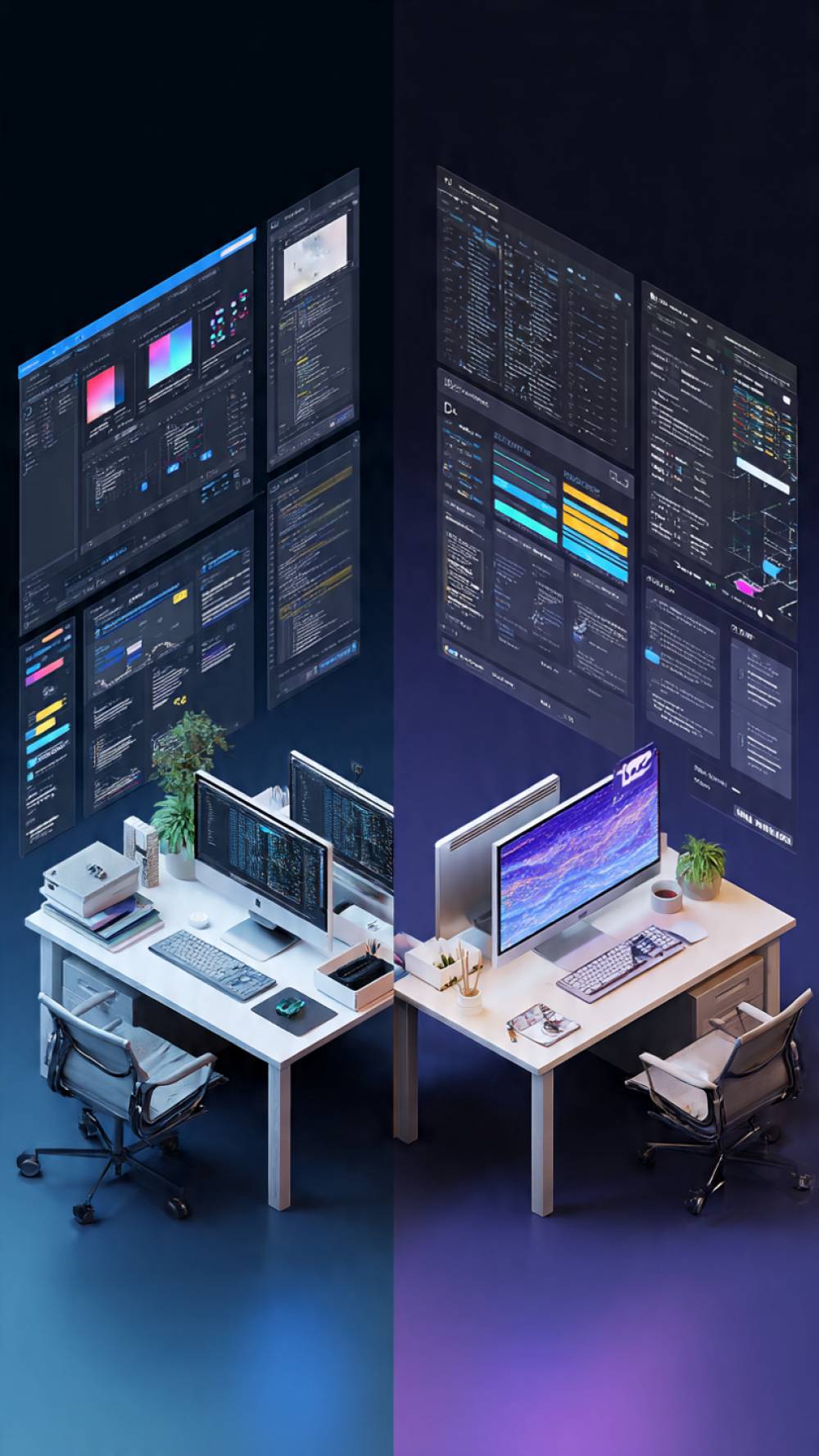
Web development is one of the most popular and rewarding career fields in technology. As businesses continue to expand their online presence, the demand for skilled developers remains strong. Two of the most common career paths in web development are Front-End Development and Back-End Development.
While both roles contribute to building websites and web applications, they focus on different aspects of development. Understanding the differences between these careers can help aspiring developers choose the path that best matches their interests, strengths, and long-term goals.
What Is a Front-End Developer?
A Front-End Developer is responsible for creating the parts of a website or application that users see and interact with directly.
They focus on the visual appearance, user experience, responsiveness, and functionality of web pages.
Everything from buttons and navigation menus to animations and layouts is typically handled by Front-End Developers.
Primary Responsibilities
-
Designing user interfaces
-
Building responsive web pages
-
Creating interactive features
-
Improving website usability
-
Optimizing page performance
-
Collaborating with designers
-
Testing browser compatibility
-
Ensuring accessibility standards
Technologies Used
-
HTML
-
CSS
-
JavaScript
-
TypeScript
-
React
-
Angular
-
Vue.js
-
Next.js
-
Tailwind CSS
-
Bootstrap
What Is a Back-End Developer?
A Back-End Developer builds and maintains the server-side components of websites and applications.
They manage databases, application logic, authentication systems, APIs, and server infrastructure.
Users may never see the work of Back-End Developers directly, but their systems power the functionality behind every application.
Primary Responsibilities
-
Developing server-side applications
-
Managing databases
-
Creating APIs
-
Implementing authentication systems
-
Handling data processing
-
Maintaining application security
-
Optimizing server performance
-
Integrating third-party services
Technologies Used
-
Python
-
Java
-
JavaScript (Node.js)
-
C#
-
PHP
-
Ruby
-
Go
-
SQL
-
MongoDB
-
PostgreSQL
Educational Requirements
Front-End Developer Education
Many Front-End Developers have backgrounds in:
-
Computer Science
-
Software Engineering
-
Information Technology
-
Web Development
However, many professionals successfully enter the field through:
-
Coding bootcamps
-
Online courses
-
Self-study
-
Personal projects
Helpful Certifications
-
Front-End Development Certificates
-
JavaScript Certifications
-
React Certifications
-
Web Accessibility Certifications
Back-End Developer Education
Common educational backgrounds include:
-
Computer Science
-
Software Engineering
-
Information Systems
-
Computer Engineering
Strong understanding of programming fundamentals is particularly important.
Helpful Certifications
-
Cloud Certifications
-
Database Certifications
-
API Development Certifications
-
Programming Certifications
Skills Comparison
Front-End Developer Skills
Technical Skills
-
HTML
-
CSS
-
JavaScript
-
Responsive Design
-
UI Development
-
Version Control
-
Front-End Frameworks
-
Browser Debugging
Soft Skills
-
Creativity
-
Communication
-
User-centered thinking
-
Attention to detail
-
Problem-solving
Back-End Developer Skills
Technical Skills
-
Programming languages
-
Database management
-
API development
-
Server administration
-
Security implementation
-
Cloud computing
-
System architecture
Soft Skills
-
Analytical thinking
-
Logical reasoning
-
Troubleshooting
-
Collaboration
-
Time management
Daily Work Comparison
Front-End Developer Daily Tasks
A Front-End Developer may spend the day:
-
Creating user interfaces
-
Writing JavaScript code
-
Improving website responsiveness
-
Collaborating with designers
-
Fixing layout issues
-
Testing user experiences
-
Optimizing page speed
The work is highly visual and user-focused.
Back-End Developer Daily Tasks
A Back-End Developer may spend the day:
-
Writing server-side code
-
Creating APIs
-
Managing databases
-
Fixing application bugs
-
Implementing security measures
-
Optimizing performance
-
Monitoring server operations
The work is primarily focused on functionality and infrastructure.
Salary Comparison
Front-End Developer Salary Outlook
Front-End Developers earn competitive salaries, particularly those experienced with modern frameworks and user experience optimization.
Factors affecting salary include:
-
Framework expertise
-
Portfolio quality
-
Industry
-
Location
-
Experience
Senior Front-End Developers often earn significantly more than entry-level professionals.
Back-End Developer Salary Outlook
Back-End Developers frequently earn slightly higher salaries because of the complexity of server-side systems and infrastructure management.
Factors affecting compensation include:
-
Programming expertise
-
Database knowledge
-
Cloud experience
-
Security skills
-
System architecture experience
Senior Back-End Developers often command premium salaries.
Career Growth Opportunities
Front-End Developer Career Path
A typical progression includes:
-
Junior Front-End Developer
-
Front-End Developer
-
Senior Front-End Developer
-
Front-End Architect
-
UI Engineering Manager
-
Director of Front-End Engineering
Additional opportunities include:
-
UX Engineering
-
Product Development
-
Mobile Development
-
Full-Stack Development
Back-End Developer Career Path
A common progression includes:
-
Junior Back-End Developer
-
Back-End Developer
-
Senior Back-End Developer
-
Software Engineer
-
Software Architect
-
Engineering Manager
Additional opportunities include:
-
Cloud Engineering
-
DevOps Engineering
-
Platform Engineering
-
Solutions Architecture
Industry Demand
Demand for Front-End Developers
Businesses require attractive and user-friendly digital experiences.
Front-End Developers are heavily recruited in:
-
Technology companies
-
E-commerce businesses
-
Digital agencies
-
Financial services
-
Healthcare organizations
Demand remains strong as user experience becomes increasingly important.
Demand for Back-End Developers
Back-End Developers remain essential because every modern application requires secure and scalable server-side infrastructure.
High-demand sectors include:
-
Cloud computing
-
FinTech
-
Artificial Intelligence
-
SaaS companies
-
Enterprise software
Demand is expected to remain strong well into the future.
Work Environment
Front-End Developers
Common work environments include:
-
Design-focused teams
-
Product development departments
-
Startups
-
Marketing agencies
-
Remote development teams
Front-End Developers frequently collaborate with designers and product managers.
Back-End Developers
Common work environments include:
-
Software engineering teams
-
Enterprise IT departments
-
Cloud infrastructure teams
-
Technology startups
-
Remote engineering organizations
Back-End Developers often work closely with database administrators and DevOps engineers.
Advantages of Becoming a Front-End Developer
-
Visual and creative work
-
Immediate feedback on projects
-
Strong demand
-
Easier portfolio creation
-
Excellent freelance opportunities
-
Fast entry into the tech industry
Challenges
-
Constant browser compatibility issues
-
Rapid framework changes
-
User interface complexity
-
Design expectations
Advantages of Becoming a Back-End Developer
-
Strong earning potential
-
Complex technical challenges
-
High demand across industries
-
Easier transition into architecture roles
-
Greater involvement in system design
Challenges
-
Less visual work
-
Complex debugging
-
Security responsibilities
-
Scalability challenges
Which Career Is Better for Beginners?
Choose Front-End Development If You:
-
Enjoy visual design
-
Like creating user experiences
-
Want to see immediate results
-
Enjoy working with interfaces
-
Prefer creative and technical work combined
Choose Back-End Development If You:
-
Enjoy programming logic
-
Like solving technical problems
-
Prefer databases and systems
-
Are interested in cloud computing
-
Want to build application functionality
Can You Learn Both?
Absolutely.
Many developers eventually become Full-Stack Developers by learning both front-end and back-end technologies.
A Full-Stack Developer can:
-
Build user interfaces
-
Develop APIs
-
Manage databases
-
Deploy applications
-
Handle complete project development
This versatility often leads to broader career opportunities.
Future Outlook
As web applications become more sophisticated, both Front-End and Back-End Developers will remain highly valuable.
Front-End development continues evolving through:
-
Advanced frameworks
-
Progressive Web Apps
-
Enhanced user experiences
-
Accessibility improvements
Back-End development continues expanding through:
-
Cloud computing
-
Microservices
-
Artificial Intelligence integration
-
Serverless architectures
Both fields offer excellent long-term prospects.
Final Verdict
Front-End and Back-End Development are both outstanding career choices, but they appeal to different interests and strengths.
Front-End Development is ideal for individuals who enjoy visual design, user interaction, and creating engaging digital experiences. It combines creativity with technical skills and offers numerous opportunities in web and product development.
Back-End Development is better suited for those who enjoy programming logic, databases, infrastructure, security, and system architecture. It often provides slightly higher earning potential and opens doors to advanced engineering and cloud-related roles.
For beginners who enjoy creativity and visible results, Front-End Development may be the better starting point. For those who prefer technical problem-solving and system design, Back-End Development can provide a highly rewarding and future-proof career path. Many professionals eventually learn both and become Full-Stack Developers, gaining the benefits of both worlds.
Front-End Developer vs Back-End Developer: Complete Career Guide – Case Studies and Comments
Front-End Developers and Back-End Developers are both essential to building modern websites and web applications. While Front-End Developers focus on the user-facing side of applications, Back-End Developers handle the server-side systems that power functionality behind the scenes. The following case studies demonstrate how each role contributes to business success and what career growth can look like in each path.
Case Study 1: E-Commerce Website Launch
Front-End Developer Case
Sophia joined an online retail company as a Front-End Developer.
The company wanted to redesign its website to improve customer experience and increase sales.
Sophia worked on:
-
Creating responsive page layouts
-
Improving navigation menus
-
Optimizing mobile user experience
-
Enhancing product pages
-
Building interactive shopping features
After the redesign:
-
Customer engagement increased
-
Mobile conversions improved
-
Bounce rates decreased
-
Online sales grew significantly
Her ability to improve the customer experience earned her recognition and a promotion to Senior Front-End Developer.
Back-End Developer Case
Michael worked on the same project as a Back-End Developer.
His responsibilities included:
-
Building product databases
-
Creating secure payment integrations
-
Developing inventory management systems
-
Optimizing server performance
-
Implementing customer authentication
His work ensured that thousands of customer transactions could be processed reliably every day.
The company's infrastructure handled increasing traffic without major issues.
Comment
This example highlights the different focus areas. Front-End Developers influence how users interact with the application, while Back-End Developers ensure the system functions reliably behind the scenes.
Case Study 2: Startup Product Development
Front-End Developer Case
A software startup wanted to launch a new project management platform.
Front-End Developer Emma designed:
-
Interactive dashboards
-
User-friendly forms
-
Task management interfaces
-
Real-time notifications
Her work made the product intuitive and easy to use.
Customer feedback consistently praised the platform's user experience.
Back-End Developer Case
Back-End Developer David developed:
-
Application logic
-
User authentication systems
-
Database architecture
-
API integrations
-
Notification services
His systems allowed the application to scale rapidly as the user base expanded.
As the company grew, David became the lead back-end engineer responsible for overall platform architecture.
Comment
Successful software products require both excellent user interfaces and reliable infrastructure. Neither role can succeed without the other.
Case Study 3: Financial Services Platform
Front-End Developer Case
A financial technology company wanted to modernize its online banking portal.
Front-End Developer Jessica redesigned the customer dashboard and transaction management screens.
The improvements resulted in:
-
Higher customer satisfaction
-
Increased digital adoption
-
Reduced support requests
-
Improved accessibility
Her ability to create clear and intuitive interfaces helped customers perform financial tasks more efficiently.
Back-End Developer Case
Back-End Developer Ryan focused on:
-
Transaction processing systems
-
Security implementation
-
Fraud detection integrations
-
Database optimization
-
Regulatory compliance requirements
His work protected sensitive financial information and ensured reliable transaction processing.
Because of the complexity of the systems involved, Ryan's role became increasingly specialized and highly valued.
Comment
In industries such as finance, back-end expertise often commands premium compensation due to security and reliability requirements.
Case Study 4: Healthcare Application Development
Front-End Developer Case
A healthcare provider launched a patient management portal.
Front-End Developer Olivia built interfaces that allowed patients to:
-
Schedule appointments
-
View medical records
-
Communicate with healthcare providers
-
Access test results
The simplified user experience increased patient adoption rates.
Back-End Developer Case
Back-End Developer Ethan developed:
-
Secure patient databases
-
Authentication systems
-
Data encryption processes
-
Integration with hospital systems
His work ensured compliance with strict healthcare regulations while protecting sensitive information.
Comment
Healthcare projects demonstrate how front-end usability and back-end security must work together to create successful digital services.
Case Study 5: Global Streaming Platform
Front-End Developer Case
A video streaming company wanted to improve viewer engagement.
Front-End Developer Ava redesigned:
-
Content recommendation layouts
-
Search functionality
-
User profiles
-
Mobile viewing experiences
The improved interface increased viewing time and customer retention.
She eventually moved into a Front-End Architecture role overseeing large-scale user experience initiatives.
Back-End Developer Case
Back-End Developer Noah focused on:
-
Content delivery systems
-
Video processing services
-
Recommendation engine infrastructure
-
Server optimization
His systems handled millions of users simultaneously without performance issues.
His experience eventually led to opportunities in cloud architecture and distributed systems engineering.
Comment
Large-scale platforms often create exceptional opportunities for Back-End Developers because of the complexity of infrastructure and scalability challenges.
Situations Where Front-End Development Excels
User Experience-Focused Organizations
Companies that prioritize customer experience often place significant value on Front-End Developers.
Examples include:
-
E-commerce companies
-
Marketing agencies
-
Product-focused startups
-
Mobile application developers
Example
Front-End Developer Sarah specialized in accessibility and user experience design.
Her expertise helped businesses create applications that were easier to use for diverse audiences.
As a result, she became a highly sought-after UX-focused engineering consultant.
Situations Where Back-End Development Excels
Large-Scale Enterprise Systems
Organizations with complex infrastructure often rely heavily on Back-End Developers.
Examples include:
-
Financial institutions
-
Cloud service providers
-
Technology companies
-
Enterprise software vendors
Example
Back-End Developer James specialized in distributed systems and cloud infrastructure.
His expertise enabled companies to support millions of users while maintaining performance and reliability.
Over time, he advanced into a Solutions Architect role with significant leadership responsibilities.
Lessons from These Case Studies
Why Many Professionals Choose Front-End Development
-
More visual and creative work
-
Immediate project feedback
-
Strong demand across industries
-
Opportunity to influence user experiences
-
Easier portfolio development
Why Many Professionals Choose Back-End Development
-
Strong technical challenges
-
Higher average earning potential
-
Opportunities in cloud and architecture roles
-
Critical role in application functionality
-
Strong long-term career growth
Professional Comments
Common Feedback from Front-End Developers
-
"Seeing users interact with something you built is highly rewarding."
-
"User experience has become a major competitive advantage for businesses."
-
"Modern frameworks make development faster and more powerful."
-
"Creativity and technical skills work together every day."
Common Feedback from Back-End Developers
-
"Building scalable systems is both challenging and satisfying."
-
"Security and performance are always important priorities."
-
"The technical depth creates strong career opportunities."
-
"Back-end skills transfer well into cloud and software architecture careers."
Career Growth Comparison
Typical Front-End Developer Progression
-
Junior Front-End Developer
-
Front-End Developer
-
Senior Front-End Developer
-
Front-End Architect
-
Engineering Manager
-
Director of Engineering
Additional paths include:
-
UX Engineering
-
Product Development
-
Mobile Development
-
Full-Stack Development
Typical Back-End Developer Progression
-
Junior Back-End Developer
-
Back-End Developer
-
Senior Back-End Developer
-
Software Engineer
-
Software Architect
-
Engineering Director
Additional paths include:
-
Cloud Engineering
-
DevOps Engineering
-
Platform Engineering
-
Solutions Architecture
Final Comment
The case studies demonstrate that both Front-End and Back-End Development offer rewarding and successful career paths. Front-End Developers focus on creating engaging, intuitive, and visually appealing user experiences, while Back-End Developers build the systems, databases, APIs, and infrastructure that make applications function effectively.
For individuals who enjoy design, user interaction, and visible results, Front-End Development may be the better fit. For those who enjoy programming logic, system architecture, databases, security, and scalability, Back-End Development often provides deeper technical challenges and broader infrastructure opportunities.
Neither path is inherently better. The ideal choice depends on your interests, strengths, and long-term career goals. Many developers eventually learn both disciplines and become Full-Stack Developers, combining the advantages of front-end creativity with back-end technical expertise.



